







What's Happening?
Textile production in American history, particularly in West Virginia, evolved from necessity and creativity, encompassing various forms of cloth, fibers, filaments, and yarns. Early settlers relied on deerskins and traded furs for textiles, but primarily
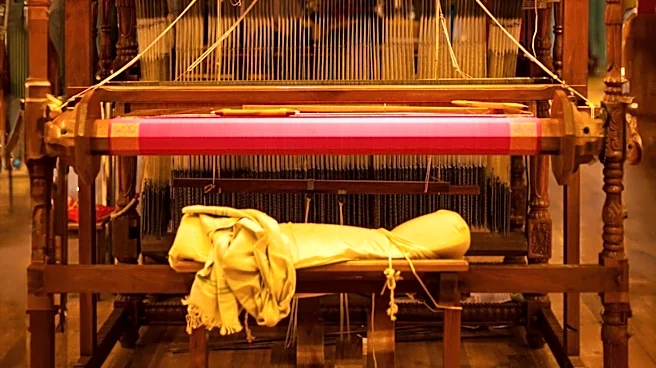
cultivated fiber crops like flax and hemp, and raised sheep for wool. Families possessed the skills to transform these raw materials into clothing, bedcovers, and other necessities. The process involved extensive labor, with specific roles for men, women, and children in preparing fibers like wool, flax, and hemp through stages such as scouring, carding, retting, and hackling. Spinning, often done in winter, utilized large hand-powered spinning wheels for short fibers and smaller treadle wheels for longer fibers like linen. Weaving followed, with barn looms for wide fabrics and smaller box looms for tapes and ribbons. The final steps included washing and fulling for wool. Common early fabrics included linsey-woolsey, a blend of linen and wool, and coarse flax tow or hemp linen for workwear. Fine flax linen was reserved for special occasions. The Industrial Revolution, with inventions like the fly shuttle, spinning machine, power loom, and cotton gin, significantly mechanized textile production, eventually shifting from household to factory-made cloth.
Why It's Important?
The historical context of textile production in West Virginia highlights the self-sufficiency and resourcefulness of early American communities. This detailed account of non-commercial textile creation underscores the foundational role of domestic labor and skill in meeting essential needs before industrialization. The transition from household production to factory-made cloth, spurred by the Industrial Revolution, represents a pivotal shift in American economic and social structures. It illustrates how technological advancements fundamentally altered daily life, consumer habits, and labor demands. The emphasis on specific fiber crops like flax, hemp, and wool in Western Virginia, as opposed to cotton which dominated national commercial production, reveals regional economic distinctions and adaptations. Understanding these historical practices provides insight into the origins of American manufacturing, the division of labor within households, and the eventual impact of industrialization on local economies and the availability of goods. The detailed processes also shed light on the ingenuity required to produce textiles from raw materials, a skill set that largely disappeared with mass production.
What's Next?
While the article primarily focuses on historical practices, the shift from household to factory production sets the stage for future developments in the textile industry. The mechanization described, starting with inventions in England and quickly adopted in the U.S., led to the establishment of textile mills, such as those in Berkeley County by 1810. This transition implies a continued evolution towards larger-scale industrial production, increased efficiency, and the eventual mass availability of machine-made fabrics. The decline of home-based textile production would lead to changes in household economies, with less time spent on textile creation and more reliance on purchased goods. This historical trajectory points towards the growth of a commercial textile industry, the development of new fashion trends influenced by affordable machine-made cloth, and the eventual globalized textile market we see today. Future implications include ongoing debates about sustainable production, labor practices in manufacturing, and the environmental impact of industrial textile processes, all rooted in this historical shift.
Beyond the Headlines
The detailed account of textile production reveals deeper cultural and social implications beyond mere manufacturing. The division of labor, with women and children primarily processing wool and men handling the more strenuous flax and hemp preparation, reflects traditional gender roles and family structures of the era. The passing of skills from one generation to the next highlights the importance of intergenerational knowledge transfer in a pre-industrial society. The mention of 'slave cloth' produced on plantations like those of Thomas Jefferson and George Washington underscores the complex and often exploitative labor systems intertwined with early American textile production, revealing the economic motivations behind plantation self-sufficiency and the forced labor of enslaved people. This aspect highlights the ethical dimensions of historical production methods. Furthermore, the article subtly touches upon the evolution of fashion and consumerism, as the availability of inexpensive machine-made cloth by the mid-1800s transformed clothing styles and accessibility, marking a significant cultural shift from durable, homemade garments to more varied and disposable fashion.