
What's Happening?
President Donald Trump has initiated a new building project targeting Lafayette Square, a public park located directly north of the White House. This development is part of a broader effort to revamp the nation's
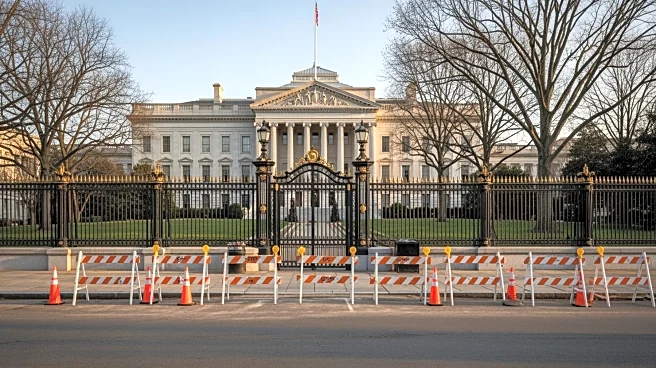
capital in preparation for the United States' 250th anniversary celebration. Workers have erected fences around the seven-acre park, restricting public access. The initial phase of the project will focus on repairing the park's fountains, followed by improvements to sprinklers, sodding, benches, and curbs. The project is expected to continue through May. President Trump has also expressed interest in repaving the park's walkways to prevent the use of bricks as weapons during demonstrations. The National Park Service, responsible for overseeing the project, has yet to respond to inquiries about the details of the renovations.
Why It's Important?
The renovation of Lafayette Square is significant as it reflects President Trump's ongoing efforts to reshape the White House complex and its surroundings. These changes have sparked criticism and legal challenges, particularly from Democrats and watchdog groups who argue that the administration is bypassing traditional oversight by federal commissions. The project is part of a larger initiative to enhance public parks in Washington, D.C., which President Trump has criticized as being unsafe and unclean. The renovations could impact public access to a historically significant site that has been a focal point for protests and demonstrations. The changes also highlight the administration's broader strategy to leave a lasting mark on the nation's capital, which includes other controversial projects like the construction of a $400 million ballroom and a triumphal arch.
What's Next?
The National Park Service is expected to provide further details on the Lafayette Square project in the coming days. Meanwhile, legal proceedings are underway as the National Trust for Historic Preservation has filed a lawsuit to halt construction on the planned ballroom until proper reviews are conducted. A court hearing is scheduled to address these concerns. The outcome of this legal challenge could influence future construction projects initiated by the Trump administration. Additionally, local officials, including D.C. Council Chairman Phil Mendelson, have expressed concerns about the piecemeal approach to these renovations, suggesting a need for more comprehensive planning and oversight.
Beyond the Headlines
The renovations at Lafayette Square and other parts of the White House complex raise questions about the balance between federal authority and local governance in Washington, D.C. The city's unique status as the nation's capital often places it at the intersection of federal and local interests, leading to tensions over jurisdiction and decision-making. The project also underscores the cultural and historical significance of public spaces in the capital, which serve as venues for civic engagement and expression. As the nation approaches its 250th anniversary, these developments may prompt broader discussions about the preservation of historical landmarks and the role of public spaces in American democracy.