






What's Happening?
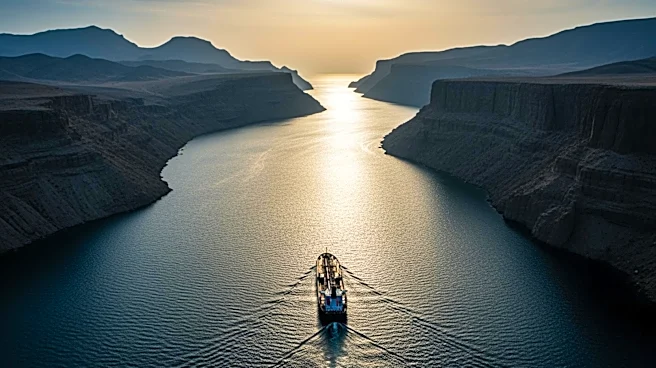
A fragile ceasefire in the Strait of Hormuz is holding, providing some stability to energy markets, but not enough to restore full confidence. Despite diplomatic efforts, shipping activity remains constrained, with Iran asserting control over the critical
energy corridor. Iran has warned ships to adhere to its directives, and there are suggestions that it might charge a toll for passage. The situation has shifted the balance of power, with Iran holding a stronger negotiating position and influencing global energy flows.
Why It's Important?
The Strait of Hormuz is a vital passage for global oil supply, with approximately 20% of the world's oil passing through it. The current situation, where transit is possible but uncertain, creates a persistent risk premium in energy markets. Iran's control over the strait impacts pricing, insurance, and trade flows, contributing to market volatility. The geopolitical dynamics in the region have significant implications for energy producers, traders, and investors, affecting global energy security and economic stability.
What's Next?
Diplomatic efforts are expected to continue in an attempt to stabilize the situation and resume normal shipping activity. However, the ceasefire remains fragile, with conflicting interpretations of its scope. Iran's leverage in negotiations may lead to further geopolitical shifts, impacting energy markets and international relations. Stakeholders will need to monitor developments closely and adapt to the evolving risk landscape.