





What's Happening?
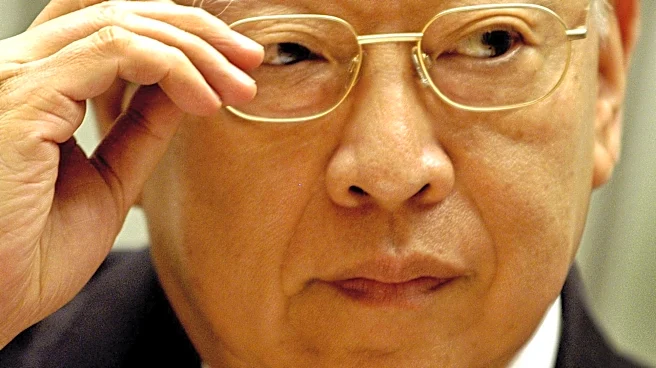
Hong Kong held a state funeral for its first post-colonial leader, Tung Chee-hwa, who passed away at the age of 89. Tung served as the city's Chief Executive from 1997 to 2005, a period marked by significant challenges including the Asian financial crisis,
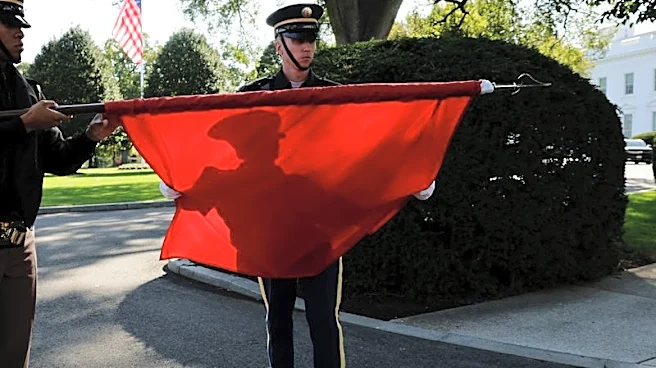
the SARS epidemic, and large-scale public protests. His casket, draped with the Chinese national flag, was transported from the Hong Kong Funeral Home to a crematorium. The ceremony saw attendance from Chinese officials and Hong Kong political leaders, with approximately 200 invited guests. Public condolences were also offered at three designated venues across the city. Tung was a former shipping tycoon hand-picked by Beijing to lead Hong Kong after its handover from British rule in 1997. Despite a rocky tenure that ended with his resignation in 2005 due to health reasons, he was praised by the Chinese government as a 'close friend of the Communist Party' and a significant contributor to the 'one country, two systems' framework.
Why It's Important?
The state funeral for Tung Chee-hwa underscores the historical significance of his role in Hong Kong's transition and its relationship with mainland China. As the first leader under the 'one country, two systems' framework, his leadership set precedents for governance in the Special Administrative Region. His tenure, characterized by economic turmoil and public dissent, highlights the inherent complexities and tensions in balancing Hong Kong's autonomy with Beijing's sovereignty. The attendance of high-ranking Chinese officials at his funeral reinforces Beijing's continued influence and oversight in Hong Kong's political landscape. The 'one country, two systems' framework, which Tung was credited with contributing to, remains a critical policy for Hong Kong's unique status, impacting its legal, economic, and social structures. The event also serves as a reminder of the city's past struggles and the ongoing evolution of its political identity.
What's Next?
While the funeral marks the end of a chapter, the legacy of Tung Chee-hwa and the challenges he faced continue to influence Hong Kong's trajectory. The 'one country, two systems' framework, which he championed, will remain a central point of discussion and policy implementation as Hong Kong navigates its future. The city's current leadership will likely continue to draw lessons from past administrations, particularly concerning economic stability, public health crises, and managing public sentiment. The ongoing integration of Hong Kong into China's overall development, as seen with initiatives like the Northern Metropolis, suggests a continued emphasis on aligning Hong Kong's growth with national strategies. Future policy decisions will likely reflect efforts to maintain stability and prosperity while adhering to the principles established during the post-handover period.
Beyond the Headlines
Tung Chee-hwa's funeral transcends a mere commemorative event, offering a deeper reflection on Hong Kong's identity and its delicate balance between East and West. His role as a 'super connector' between Beijing, Hong Kong, and Washington highlights the city's historical position as a crucial bridge in international relations. The public's mixed reactions to his legacy, from praise for his efforts to navigate difficult circumstances to criticism for policies that sparked protests, reveal the enduring divisions and aspirations within Hong Kong society. The emphasis on his contributions to the 'one country, two systems' framework by Beijing underscores the political narrative surrounding Hong Kong's autonomy. This event subtly reinforces the ongoing ideological and governance debates that shape Hong Kong's unique cultural and political landscape, influencing everything from civil liberties to economic policies and international perceptions.