





What's Happening?
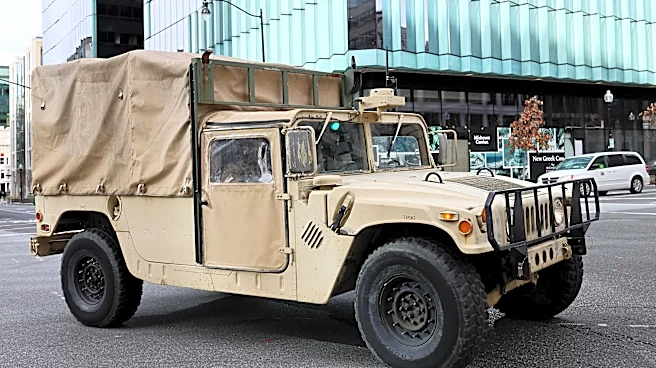
In the early hours of Sunday, National Guard troops in Memphis fatally shot a man identified as Tyrin Johnson, who was armed with a handgun. The incident occurred as Memphis police and Tennessee National Guard soldiers responded to reports of shots fired
in downtown Memphis. According to the Tennessee Bureau of Investigation (TBI), Johnson fled on foot and was pursued by law enforcement. The situation escalated, leading to two National Guard soldiers firing upon Johnson, resulting in his death. The TBI is investigating the incident at the request of Shelby County District Attorney Steve Mulroy, aiming to independently determine the events leading to the shooting. The National Guard has been patrolling Memphis since October 2025 as part of a federal task force established by President Trump to combat crime in the city.
Why It's Important?
The deployment of National Guard troops in Memphis is part of a broader federal initiative to address high crime rates in the city, which has one of the highest violent crime rates in the United States. While some residents have welcomed the intervention, the deployment has been controversial, with Democratic state and local officials challenging its legality. They argue that the deployment violates the Tennessee Constitution's limits on the governor's ability to deploy state military forces. A temporary injunction blocking the deployment was overturned by a state appeals court, allowing the operation to continue. The fatal shooting incident underscores the tensions and complexities involved in using military forces for domestic law enforcement purposes.
What's Next?
The Tennessee Bureau of Investigation will continue its investigation into the shooting, collecting evidence and conducting interviews to establish a clear sequence of events. The outcome of this investigation could influence public opinion and policy regarding the use of National Guard troops in domestic law enforcement. Additionally, the legal challenges to the deployment may continue, potentially affecting future decisions on similar federal interventions in other cities. Stakeholders, including local government officials, civil rights groups, and community leaders, are likely to engage in discussions about the implications of military involvement in civilian policing.