





What's Happening?
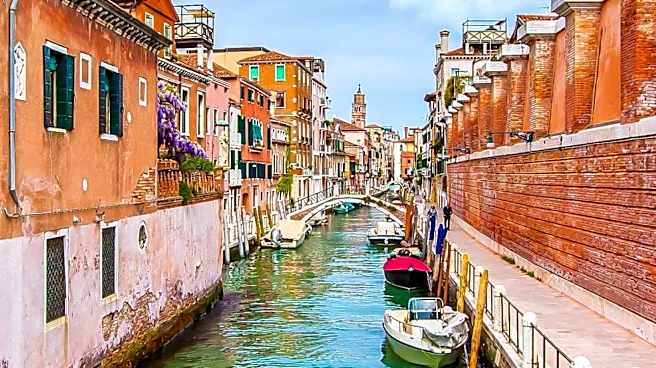
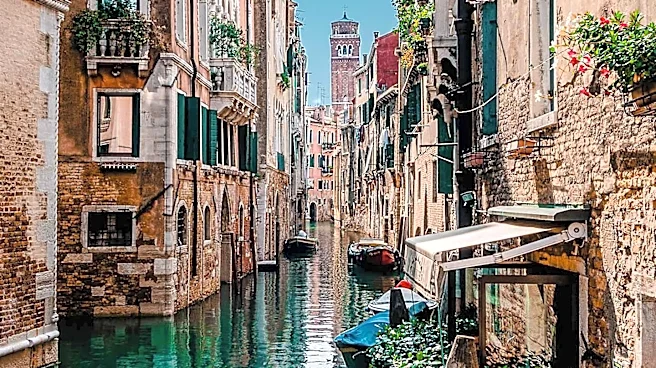
Venice, Italy, a UNESCO World Heritage site, is actively battling the dual threats of rising sea levels and mass tourism to protect its historic buildings and canals. The city's primary defense against flooding is MOSE, a system of massive movable barriers
designed to temporarily seal off the Venetian Lagoon from the Adriatic Sea during extreme high tides. This system provides authorities with an estimated 50 to 70 years to develop long-term solutions for permanent protection. Concurrently, Venice is grappling with the pressures of millions of tourists who visit annually. While tourism sustains the city's economy, it also places significant strain on its infrastructure and residents. The city is working to manage these challenges to ensure the preservation of its unique cultural and environmental heritage for future generations.
Why It's Important?
The efforts in Venice highlight a critical global challenge faced by many historic and environmentally sensitive destinations: balancing economic benefits from tourism with the imperative of preservation. For the U.S., this situation serves as a case study for coastal cities and popular tourist destinations that are vulnerable to climate change impacts and overtourism. The development and implementation of large-scale infrastructure projects like MOSE demonstrate the significant investment required to mitigate environmental threats. Furthermore, Venice's struggle to manage tourist influx underscores the need for sustainable tourism policies that protect local communities and infrastructure, a lesson that could inform U.S. cities experiencing similar pressures on their natural and cultural resources. The long-term viability of such iconic locations depends on effective strategies to address these complex issues.
What's Next?
Venetian authorities will continue to operate the MOSE flood barrier system as a short-to-medium-term solution against rising sea levels. During this period, the focus will be on planning and developing more permanent protective measures for the city. Concurrently, Venice is expected to explore and implement further strategies to manage mass tourism, potentially including regulations on visitor numbers, changes to tourist access, or initiatives to encourage more sustainable forms of tourism. These efforts will likely involve ongoing collaboration between local government, environmental experts, and tourism stakeholders to find a balance that supports both the city's economy and its preservation goals. The effectiveness of these measures will be closely watched by other global destinations facing similar environmental and tourism-related challenges.
Beyond the Headlines
The situation in Venice extends beyond immediate environmental and tourism management, touching upon profound ethical and cultural dimensions. The city's struggle represents a broader global dilemma: how to reconcile human economic activity with the preservation of irreplaceable natural and cultural heritage in an era of rapid climate change. The reliance on engineering solutions like MOSE, while necessary, also raises questions about the long-term sustainability of such interventions and the potential for unintended ecological consequences. Culturally, the challenge lies in maintaining the authentic character and resident life of Venice amidst the overwhelming presence of tourism, prompting discussions about the very definition of a 'living city' versus a 'museum city.' This ongoing battle in Venice serves as a poignant symbol of humanity's complex relationship with its environment and its past.