






What's Happening?
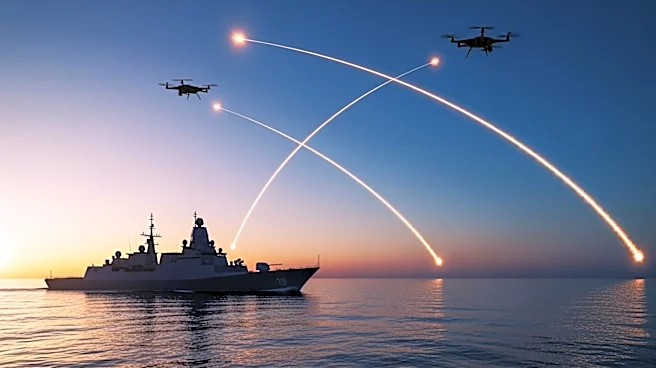
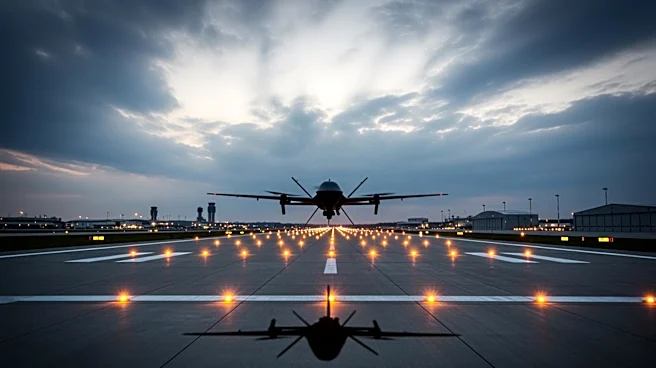
The U.S. military has shot down Iranian drones and ballistic missiles launched towards the Strait of Hormuz and Gulf Arab allies, escalating tensions in the region. This military action comes as part of a response to Iranian attacks, including a recent
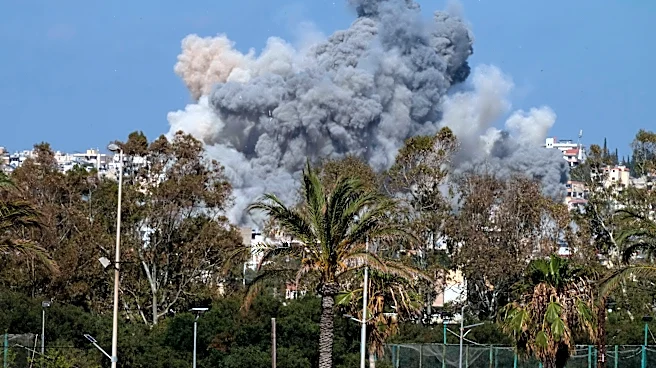
drone strike that damaged a passenger terminal at Kuwait's main airport. The U.S. Central Command reported that the Iranian drones posed an immediate threat to regional maritime traffic, prompting the U.S. to strike Iranian coastal surveillance radar sites. This exchange of fire has further strained a fragile ceasefire between the U.S. and Iran, with ongoing diplomatic efforts to extend the truce and address Iran's nuclear program. President Trump has expressed a desire for a quick resolution, though negotiations remain complex and unresolved.
Why It's Important?
The military actions in the Strait of Hormuz have significant implications for global oil and natural gas shipments, as the strait is a critical corridor for these resources. The blockade on Iranian ports and the resulting spike in energy prices pose political challenges for President Trump's administration, particularly ahead of the midterm congressional elections. The ongoing conflict and diplomatic negotiations with Iran are crucial for regional stability and have broader implications for U.S. foreign policy and international relations. The situation also affects U.S. allies in the Gulf region, who are directly threatened by Iranian military actions.
What's Next?
The U.S. and Iranian negotiators have reached a tentative agreement to extend the ceasefire by 60 days, with plans to initiate new talks on Iran's nuclear program. However, President Trump has called for unspecified changes to the agreement, and Iranian officials have not publicly agreed to the terms. The continuation of military engagements and diplomatic negotiations will be critical in determining the future of U.S.-Iran relations and regional stability. The potential for further escalation remains, with both sides showing readiness for military action if diplomatic efforts fail.