
What's Happening?
A panel of regional experts convened by the Lowy Institute addressed critical human security threats facing Pacific communities, emphasizing that these issues are often overshadowed by discussions of great-power
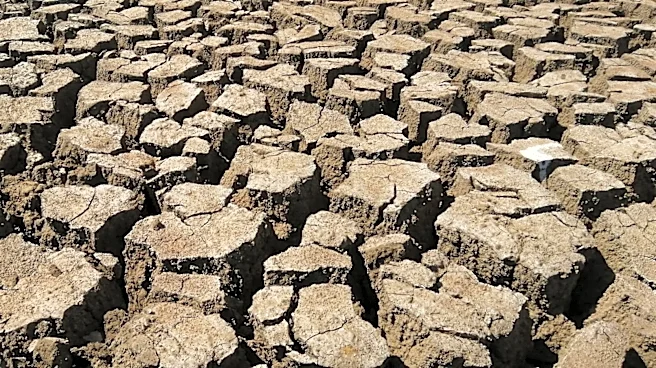
competition. The discussion highlighted challenges such as limited access to education, rising drug use and trafficking, the increasing impact of El Niño-driven drought and extreme weather, and the spread of HIV. Moderated by Oliver Nobetau, Director of the Pacific Islands Program at the Lowy Institute, the panel included Serena Sasingian, Dr. Nick Thomson, and Dr. Anna Naupa. The experts underscored that for Pacific communities, security begins with local concerns, advocating for an approach that prioritizes human well-being over geopolitical maneuvering. The conversation explored how Australia could collaborate more effectively with its Pacific partners to address these pressing human security needs.
Why It's Important?
The focus on human security in the Pacific is crucial for U.S. foreign policy and regional stability, as the U.S. has significant strategic interests in the Indo-Pacific. By highlighting local challenges like education, health, and climate impacts, the Lowy Institute panel implicitly critiques a purely geopolitical lens, suggesting that addressing these fundamental human needs is essential for long-term stability and resilience in the region. Neglecting these issues could create vulnerabilities that external actors might exploit, potentially undermining U.S. influence and regional partnerships. Furthermore, the discussion on how Australia should work with its Pacific partners offers insights for U.S. diplomatic and aid strategies, emphasizing the importance of tailored, community-centric approaches rather than broad, top-down initiatives. A stable and secure Pacific, built on strong human security foundations, is vital for maintaining a free and open Indo-Pacific, which is a stated U.S. objective.
What's Next?
The insights from this Lowy Institute panel could inform future policy discussions and aid initiatives from countries like Australia and the United States regarding the Pacific. The emphasis on human security suggests a potential shift in focus for international development and diplomatic efforts, moving towards more localized and community-driven solutions. Stakeholders, including international aid organizations and regional governments, may be prompted to re-evaluate their strategies to better address the root causes of insecurity in the Pacific, such as climate vulnerability and public health crises. This could lead to increased funding and programmatic support for education, healthcare infrastructure, and climate resilience projects in the region. The ongoing dialogue is likely to encourage greater collaboration between Pacific island nations and their partners to develop comprehensive strategies that prioritize the well-being of their populations.
Beyond the Headlines
The panel's call to prioritize human security over geopolitical rivalry in the Pacific reveals a deeper ethical and strategic implication. It suggests that a narrow focus on great-power competition risks overlooking the fundamental needs of populations, potentially leading to instability and resentment. This perspective challenges the traditional security paradigm, advocating for a more holistic approach where human well-being is seen as a prerequisite for national and regional stability. The discussion also highlights the cultural dimension of security in the Pacific, where local communities define security in terms of daily challenges rather than abstract geopolitical contests. This implies that effective engagement in the region requires a profound understanding and respect for local priorities, moving beyond a transactional relationship to one built on genuine partnership and shared human values. The long-term shift could be towards a more integrated security framework that recognizes the interconnectedness of environmental, social, and political factors.