
What's Happening?
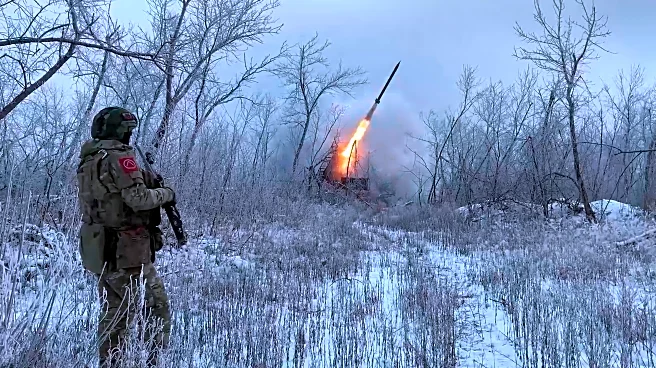
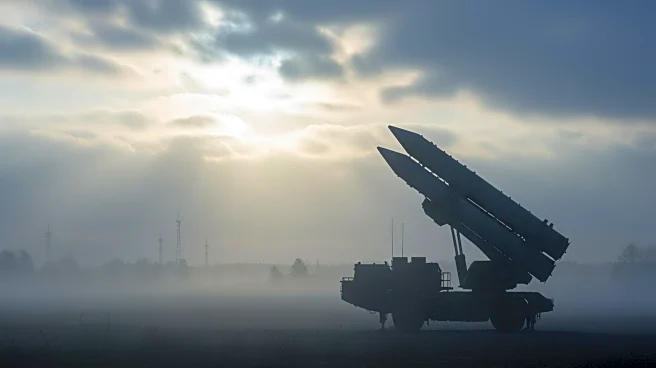
Russia has announced that its nuclear-capable Oreshnik missile system has entered active service in Belarus. This development comes as the U.S. continues its efforts to mediate a peace agreement to end
the ongoing conflict in Ukraine. The Russian Defense Ministry released footage of the missile system, which is part of a mobile intermediate-range ballistic missile system, during combat training exercises. Belarusian President Alexander Lukashenko confirmed the arrival of up to 10 such missile systems in Belarus earlier this month. Russian President Vladimir Putin had previously stated that the Oreshnik would be operational by the end of the year. The deployment of these missiles is seen as a strategic move by Russia to strengthen its position in the ongoing peace negotiations with Ukraine and its Western allies.
Why It's Important?
The deployment of the Oreshnik missile system in Belarus significantly impacts the geopolitical landscape in Eastern Europe. It underscores Russia's intent to maintain a strong military presence in the region, potentially altering the balance of power. The missiles, capable of carrying nuclear warheads, pose a direct threat to NATO countries, with Russian state media claiming they could reach Poland and NATO headquarters in Brussels within minutes. This development complicates the peace talks between Russia and Ukraine, as it demonstrates Russia's readiness to escalate military tensions if its demands are not met. The presence of these missiles in Belarus also highlights the deepening military and political ties between Russia and Belarus, further isolating Belarus from Western nations.
What's Next?
The deployment of the Oreshnik missiles is likely to provoke a response from NATO and Western countries, who may increase their military readiness in the region. The ongoing peace talks between Russia and Ukraine, facilitated by the U.S., are at a critical juncture, and the presence of these missiles could either pressure Ukraine into concessions or lead to a breakdown in negotiations. Additionally, Belarus's role in hosting these missiles may lead to further sanctions from Western countries, increasing its reliance on Russia. The international community will closely monitor the situation, as any escalation could have significant implications for regional and global security.
Beyond the Headlines
The introduction of the Oreshnik missile system in Belarus raises ethical and legal questions regarding the deployment of nuclear-capable weapons in a non-nuclear state. It also highlights the challenges of arms control in the post-Cold War era, as the deployment of intermediate-range missiles was previously banned under a treaty that both the U.S. and Russia abandoned in 2019. The situation underscores the need for renewed international dialogue on arms control and non-proliferation to prevent further escalation and ensure regional stability.