



What's Happening?
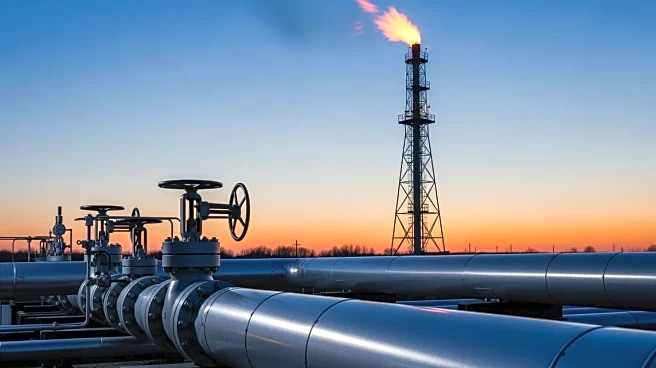
Nigeria has granted permits to 28 companies to capture gas that is currently being flared by the oil industry. This initiative is part of Nigeria's efforts to reduce emissions and generate revenue from gas that would otherwise be wasted. The Nigerian
Upstream Petroleum Regulatory Commission (NUPRC) reported that there were 42 bids to capture gas flared at 49 sites in the Niger Delta region, with 14 candidates still needing to meet permit requirements. The initiative aims to capture and commercialize between 250 and 300 million standard cubic feet of gas, potentially attracting up to $2 billion in investment and creating over 100,000 jobs. The NUPRC estimates that this will eliminate approximately six million tons of carbon dioxide annually and support nearly three gigawatts of potential electricity generation capacity.
Why It's Important?
This development is significant as it addresses both environmental and economic challenges. By capturing flared gas, Nigeria aims to reduce its carbon emissions, contributing to global efforts to combat climate change. Economically, the initiative could transform a wasted resource into a revenue-generating asset, potentially boosting Nigeria's economy and creating jobs. The move also aligns with Nigeria's broader goal of achieving net-zero emissions by 2060. For the oil industry, this could mean new opportunities for investment and innovation in gas utilization technologies.
What's Next?
The next steps involve the remaining 14 candidates meeting the requirements to obtain permits. As the initiative progresses, it will be crucial to monitor the implementation of the Nigerian Gas Flare Commercialization Program and its impact on emissions and economic growth. Stakeholders, including the government and participating firms, will need to ensure that the infrastructure and technology are in place to effectively capture and utilize the flared gas. Additionally, the success of this initiative could serve as a model for other oil-producing countries facing similar challenges.
Beyond the Headlines
Beyond the immediate economic and environmental benefits, this initiative could have broader implications for Nigeria's energy policy and its role in the global energy market. By leveraging its gas reserves, Nigeria could enhance its energy security and reduce its reliance on oil exports. This shift could also position Nigeria as a leader in sustainable energy practices in Africa, potentially influencing regional energy policies and attracting international partnerships.