



What's Happening?
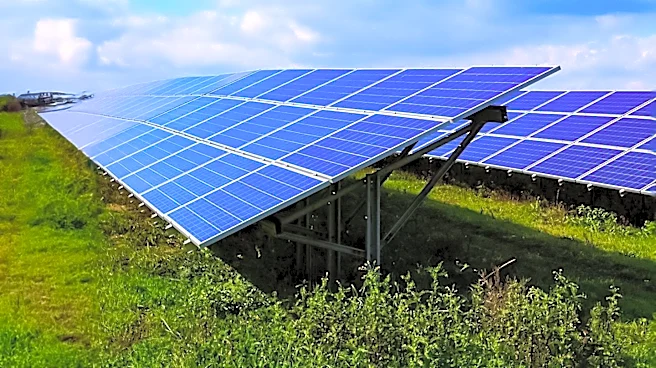
A former landfill in Voorhees Township, New Jersey, which has been closed for over 50 years since 1972, is slated for transformation into a 13.5-acre solar field. This project is part of New Jersey's Community Solar Energy Program, designed to expand
access to renewable energy and reduce utility bills for residents. The solar panels are expected to cover approximately half of the 35-acre property. Upon completion, more than half of the energy generated by this solar field will be specifically allocated to low- and moderate-income households, according to a township administrator. The program allows households using the state's four major electricity providers to subscribe to a participating solar facility and receive renewable credits on their bills without needing to install solar panels on their own properties.
Why It's Important?
This initiative is significant for its dual impact on environmental sustainability and social equity within New Jersey. By repurposing a long-dormant landfill for renewable energy generation, Voorhees Township is contributing to the state's clean energy goals and reducing reliance on fossil fuels. The dedication of over half the generated energy to low- and moderate-income households addresses energy poverty, making clean energy more accessible and affordable for vulnerable populations. This model could serve as a blueprint for other communities looking to utilize underutilized land for sustainable development while simultaneously providing tangible economic benefits to residents who might otherwise struggle with rising energy costs. It also highlights the potential for state-level programs to drive local renewable energy adoption and support economic justice.
What's Next?
The Voorhees solar project is expected to move forward as part of the statewide Community Solar Energy Program. Reporter Lacey Latch is anticipated to provide further insights into the program and the specifics of the Voorhees project. The implementation will involve the installation of solar panels across the designated 13.5 acres of the former landfill. Once operational, the project will begin supplying renewable energy, with a significant portion directed to low- and moderate-income households, who will then receive renewable credits on their electricity bills. This development will likely be monitored as a case study for similar initiatives in other parts of the state and potentially the nation, demonstrating how brownfield sites can be effectively repurposed for green energy production.
Beyond the Headlines
The transformation of a landfill into a solar field represents a broader shift in land use and environmental policy, moving towards regenerative practices. Landfills, often seen as environmental liabilities, are being re-evaluated as potential assets for renewable energy infrastructure. This project underscores the concept of a circular economy, where waste sites are not just contained but actively contribute to sustainable energy solutions. Furthermore, the explicit focus on low- and moderate-income households highlights a growing recognition of energy equity as a critical component of climate action. It challenges the traditional model where the benefits of renewable energy disproportionately accrue to higher-income brackets, aiming instead for a more inclusive distribution of environmental and economic advantages. This approach could foster greater community buy-in for renewable energy projects, especially in areas that have historically borne the brunt of environmental burdens.