
What's Happening?
Consumer Reports has provided guidance on how to prevent injuries from slips and falls during winter weather conditions. The report emphasizes the importance of preparing both oneself and one's home to handle
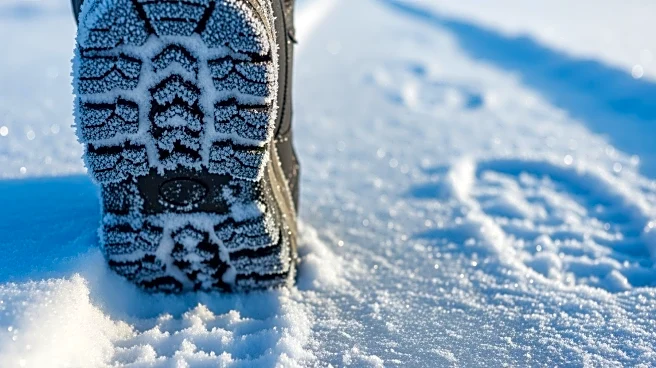
ice and snow effectively. Key recommendations include the use of ice melts, which contain salt or sodium chloride, to manage icy surfaces. However, these products are less effective in extremely cold temperatures and can damage pavements and harm plants and pets. To mitigate these issues, it is suggested to use less salt and mix it with sand for better traction. Additionally, layering ice melt before and during a storm can enhance its effectiveness. The report also advises against relying on products marketed as environmentally or pet-friendly, as they often do not live up to their claims. For personal safety, wearing proper winter footwear with non-skid rubber treads and using ice cleats can significantly reduce the risk of falls.
Why It's Important?
The guidance from Consumer Reports is crucial as winter weather conditions lead to numerous injuries from slips and falls, which can overwhelm emergency rooms. By following these recommendations, individuals can reduce the risk of such injuries, thereby alleviating pressure on healthcare facilities. Moreover, the advice on minimizing the use of salt and opting for alternatives like sand can prevent environmental damage and protect pets, making it a more sustainable approach to winter safety. This information is particularly valuable for homeowners and those responsible for maintaining public walkways, as it provides practical solutions to common winter hazards.
What's Next?
As winter progresses, individuals and communities are likely to continue facing challenges related to ice and snow. Implementing the strategies recommended by Consumer Reports can help mitigate these issues. Homeowners may need to invest in appropriate footwear and ice cleats, while municipalities might consider adopting these practices to maintain public safety. Additionally, there may be increased demand for products that offer effective traction on ice, prompting retailers to stock up on these items. Ongoing education and awareness campaigns could further enhance public safety during winter months.