








What's Happening?
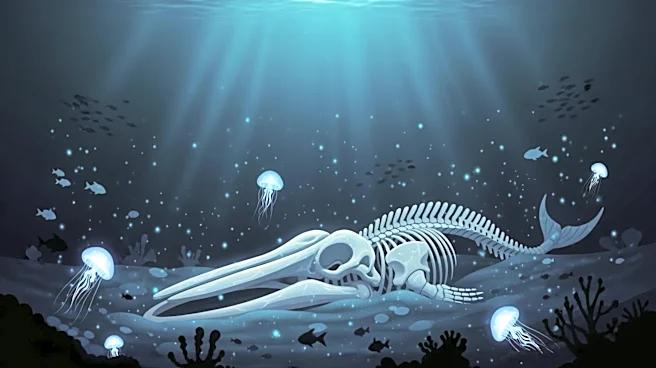
Scientists have discovered a deep-sea whale graveyard in the southeastern Indian Ocean, teeming with marine life such as jellyfish, tubeworms, and brittle stars. This graveyard, located up to 23,000 feet below the surface, is the deepest and oldest found,
with some bones dating back 5.3 million years. The site was explored during multiple deep-sea submersible trips in 2023, revealing five carcass sites and fossils, including skulls of beaked and baleen whales. The unique chemistry of whale bones supports diverse marine communities, and many of the species found are likely undocumented. The findings, published in the journal Nature, highlight the adaptability of life in extreme ocean conditions.
Why It's Important?
The discovery of this whale graveyard provides valuable insights into how marine life adapts to extreme conditions, such as high pressure and low light and oxygen levels. Understanding these ecosystems can inform conservation efforts and enhance knowledge of biodiversity in remote ocean environments. The graveyard's preservation over millions of years offers clues about the resilience of marine ecosystems and the potential impacts of environmental changes. This research underscores the importance of protecting deep-sea habitats, which are often overlooked but play a crucial role in global biodiversity.