


What's Happening?
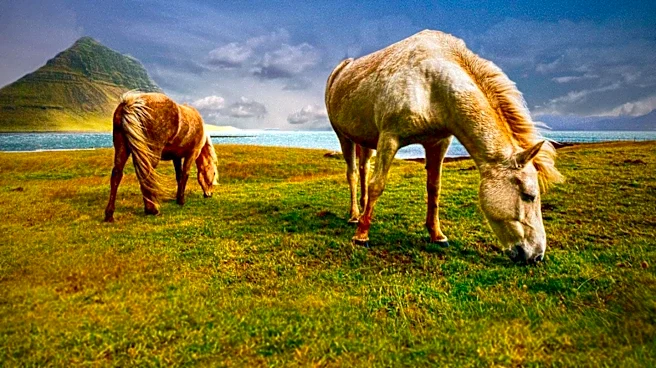
In Eastern Kentucky, the population of free-roaming horses has been increasing since the 2008 financial crisis, leading to challenges in managing these animals. Various organizations, including the Kentucky Humane Society and the Appalachian Horse Center,
are working to address the issue. The horses, which are primarily feral, roam across reclaimed mine lands in several counties. Efforts to manage the population include providing food and salt, as well as implementing population control strategies such as equine birth control and castration of young stallions. The Humane Society has been administering porcine zona pellucida (PZP) to control fertility, while the Kentucky Horse Council conducts 'drop-in gelds' to prevent breeding. These measures aim to reduce the population to a sustainable level, ensuring the horses' welfare and minimizing their impact on the environment.
Why It's Important?
The growing population of free-roaming horses in Eastern Kentucky presents significant challenges for local communities and the environment. These horses can cause safety risks when they wander into roads and residential areas. Additionally, their increasing numbers strain the environment's capacity to support them, leading to potential welfare issues such as malnutrition. The efforts to manage the population are crucial for maintaining ecological balance and ensuring the horses' well-being. Moreover, these horses have become a tourist attraction, contributing to the local economy. However, without effective management, the situation could lead to more severe ecological and safety problems, highlighting the importance of ongoing population control initiatives.
What's Next?
Organizations involved in managing the free-roaming horse population in Eastern Kentucky will continue their efforts to control the population through fertility management and castration. The Humane Society expects to see significant results from the PZP program in the coming years, which could help stabilize the population. Additionally, the Kentucky Horse Council will persist with its castration efforts, although the scale of the problem requires more extensive measures. As these initiatives progress, stakeholders will need to monitor the population's impact on the environment and local communities, adjusting strategies as necessary to ensure the horses' welfare and the region's ecological health.