





What's Happening?
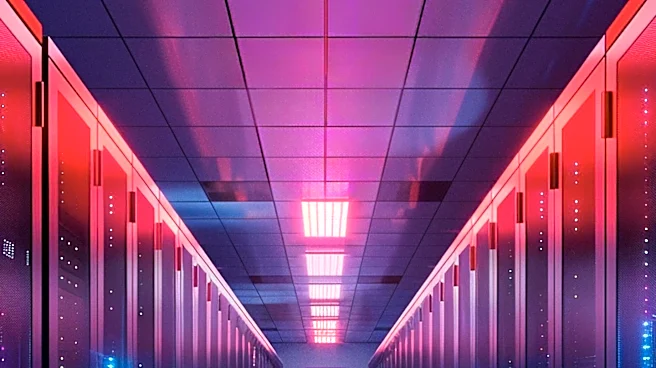
Residents in West Jordan, Utah, are expressing concerns about the noise pollution emanating from a nearby data center operated by Aligned Data Centers. Theresa Sorensen, a long-time resident, stated that she can hear the generators running in every room
of her house. Another neighbor, Steve Ready, reported that the noise frequently wakes him up at night, describing it as a 'wind tunnel' or 'airplanes circling.' The Aligned Data Center campus spans approximately 55 acres. While a low hum is a constant presence, the noise intensifies significantly when the generators activate. Residents have lived in the area for decades and are now facing disruptions to their daily lives and sleep patterns due to the data center's operations. Aligned Data Centers has acknowledged the issue, stating they have implemented measures such as sound-reducing enclosures for their backup generators, which are primarily used for maintenance or emergencies.
Why It's Important?
This situation highlights a growing concern in communities across the U.S. where large-scale industrial facilities, such as data centers, are established in proximity to residential areas. The noise pollution described by West Jordan residents can have significant impacts on quality of life, including sleep disruption, increased stress levels, and a diminished ability to enjoy one's home and property. For homeowners like Theresa Sorensen, the noise could also affect property values and future sale prospects. The issue underscores the challenges of balancing technological infrastructure development with community well-being and environmental considerations. As more data centers are proposed and built to support the increasing demand for digital services, the potential for similar conflicts between industrial operations and residential communities is likely to rise, necessitating more proactive planning and mitigation strategies.
What's Next?
As the conversation around data centers continues, residents like Steve Ready are urging other communities to be informed and engaged early in the planning stages of such developments. The ongoing complaints suggest that the current mitigation efforts by Aligned Data Centers, such as sound-reducing enclosures, may not be fully effective in addressing the residents' concerns. Future steps could involve further dialogue between the community, Aligned Data Centers, and local authorities to explore additional noise reduction measures or alternative operational schedules for the generators. This situation may also prompt local zoning boards and planning commissions in West Jordan and other Utah communities to re-evaluate regulations regarding the siting and operation of data centers, particularly concerning their proximity to residential zones and the potential for noise and other environmental impacts.
Beyond the Headlines
The West Jordan data center issue extends beyond immediate noise complaints, touching upon broader themes of urban planning, technological expansion, and community rights. The rapid growth of the digital economy necessitates extensive infrastructure, including data centers, which are often energy-intensive and can have significant environmental footprints. This case brings to light the ethical considerations of placing such facilities near established residential areas, raising questions about the 'right to quiet enjoyment' of one's property versus the economic benefits and technological advancements brought by these centers. It also highlights a potential disconnect between corporate mitigation efforts and the lived experiences of affected residents, suggesting a need for more comprehensive impact assessments and community engagement processes that genuinely address local concerns rather than merely meeting regulatory minimums. The long-term implications could include increased advocacy for stricter zoning laws and environmental protections in areas experiencing rapid industrial development.