

What's Happening?
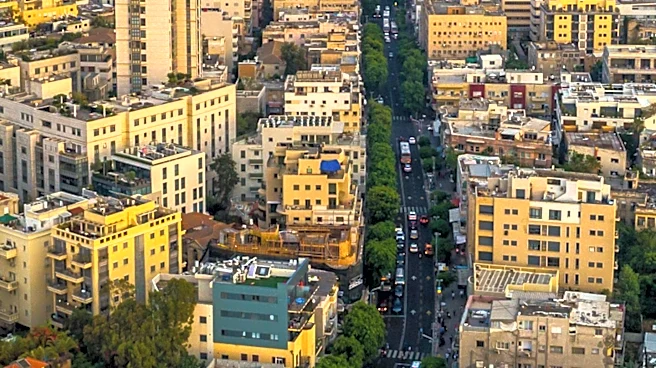
The Tekuma region in Israel, encompassing Sderot, Eshkol, Sha'ar HaNegev, Sdot Negev, and Chof, has seen its population grow by 10% beyond pre-October 7 levels, now reaching approximately 66,000 residents. This represents an increase of about 5,000 people
compared to three years ago. According to figures released by the Tekuma Directorate, over 90% of the region's residents have returned to their communities. Alongside the return of evacuated residents, thousands of new residents have moved to the area since October 7. Sderot, the largest city, now has a population of around 40,000. The Tekuma Directorate aims to double the region's population by 2033. Reconstruction efforts are ongoing in several communities, with significant budgets allocated for renovating and rebuilding residential and public buildings, as well as upgrading infrastructure.
Why It's Important?
This significant population growth and return of residents to the Tekuma region demonstrate a remarkable resilience and commitment to rebuilding after the October 7 attacks. For the U.S., a key ally of Israel, this development is important as it reflects the success of recovery efforts and the determination of communities to thrive despite adversity. The substantial investment in reconstruction, security, education, and healthcare, totaling approximately NIS 17 billion, highlights the comprehensive approach to revitalization. This resilience can serve as a model for other regions facing similar challenges and reinforces the importance of international support for post-conflict recovery. The goal of doubling the population by 2033 indicates a long-term vision for growth and stability in a strategically sensitive area, which aligns with U.S. interests in regional security.
What's Next?
Reconstruction and construction work will continue across the Tekuma region, with specific timelines for the return of residents to communities like Be'eri (expected to begin end of December and continue through July 2027) and Nir Oz (expected return during 2027). The Tekuma Directorate will focus on generating further growth and attracting new residents to achieve its goal of doubling the population by 2033. This will involve continued investment in infrastructure, housing, security, education, and healthcare. The ongoing commitment of NIS 11.6 billion by the end of 2025, with an additional NIS 2.8 billion earmarked for 2026, indicates sustained efforts to rebuild and develop the region. The success of these efforts will be crucial for the long-term stability and prosperity of the area.
Beyond the Headlines
The return and growth of the Tekuma region's population represent more than just demographic shifts; they symbolize a profound act of defiance and determination in the face of terror. The decision of residents to return and new ones to move in reflects a deep connection to the land and a collective will to rebuild and thrive. This process also highlights the psychological and social dimensions of recovery, where community solidarity and a sense of security are as vital as physical infrastructure. The substantial government investment underscores the national commitment to supporting these communities, but it also raises questions about the long-term sustainability of such large-scale recovery efforts and the ongoing security challenges. Ethically, the rebuilding process must prioritize the well-being and agency of the affected residents, ensuring that their voices are heard in shaping the future of their communities. This narrative of resilience offers a powerful counterpoint to the trauma of the attacks, demonstrating the enduring human spirit in the face of extreme adversity.