


What's Happening?
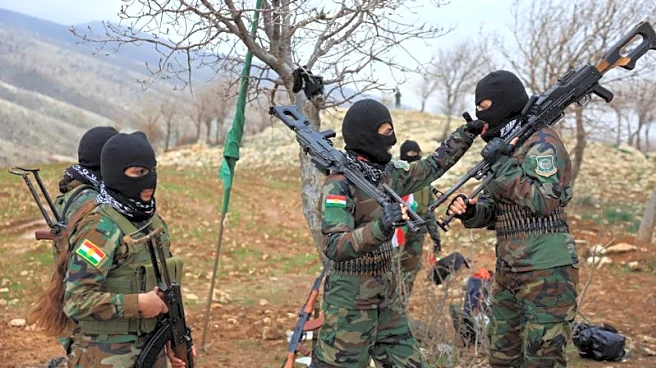
The US and Israel are reportedly encouraging Kurdish militias to act as ground forces against Iran's central government, aiming for regime change. This strategy revives fears of historical betrayals, as Kurdish fighters have previously been used as proxies
by the US, only to be abandoned later. The current push for an Iranian Kurdish rebellion is fraught with risk, as the US seeks to destabilize Iran through separatist movements. Kurdish leaders in Iraq have denied involvement in plans to arm Kurdish groups, emphasizing the need to protect their region's territorial integrity.
Why It's Important?
The US strategy of using Kurdish militias as proxies could have significant geopolitical implications. Historically, such actions have led to instability and betrayal, affecting regional dynamics. Encouraging Kurdish militias against Iran might provoke reactions from neighboring countries like Turkiye, which has a history of conflict with Kurdish groups. The situation could further destabilize the Middle East, impacting US relations with regional powers and complicating efforts for peace.
What's Next?
The Kurdish leadership in Iraq is likely to continue resisting US pressure to engage in conflict with Iran. The US may need to reassess its strategy, considering the potential backlash from regional powers and the risk of further destabilizing the region. Diplomatic efforts might be necessary to address the concerns of Kurdish leaders and prevent escalation.
Beyond the Headlines
The use of Kurdish militias as proxies raises ethical questions about the exploitation of minority groups for geopolitical purposes. The historical pattern of betrayal could undermine trust in US foreign policy and affect its credibility in the region. The situation highlights the need for a more sustainable and ethical approach to conflict resolution in the Middle East.