







What's Happening?
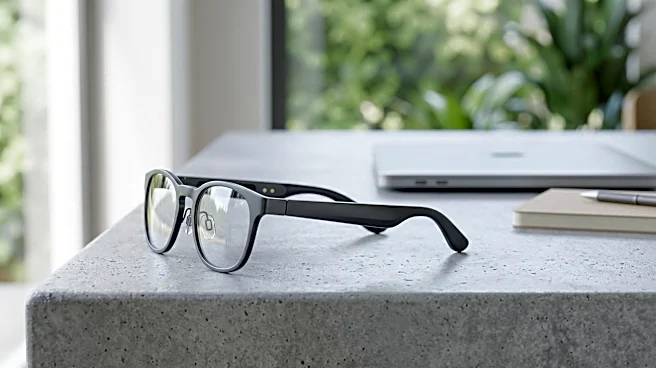
Meta is reportedly developing a new line of smart glasses, codenamed 'Luna,' which would be camera-free and primarily centered on voice AI. This design shift aims to address privacy concerns that have plagued previous iterations of Meta's smart glasses, which included
cameras and faced criticism for their ability to discreetly record individuals. The Luna glasses are expected to feature six microphones, speakers, and voice access to Meta AI and Muse, Meta's newly launched consumer AI agent. By removing the camera, Meta intends to make the devices more acceptable in public spaces and workplaces, although questions regarding microphone privacy still remain. The company could potentially unveil these glasses at its Connect event in September, with shipments targeted for October.
Why It's Important?
The development of camera-free smart glasses represents a significant strategic move by Meta to overcome a major hurdle in the widespread adoption of wearable technology: privacy. Previous smart glasses with cameras have faced public backlash and restrictions in various settings due to concerns about surreptitious recording. By focusing on voice AI, Meta is attempting to reframe the utility of smart glasses, emphasizing hands-free interaction with AI assistants rather than visual capture. This could open up new markets and use cases for smart glasses, particularly in environments where cameras are prohibited or viewed with suspicion. However, the presence of multiple microphones still raises questions about data collection, how voice interactions are processed, and the extent to which user privacy can be guaranteed, especially in sensitive environments like workplaces.
What's Next?
If Meta proceeds with the launch of Luna as reported, the immediate next step would be its official unveiling at the Connect event. Following the launch, the market will closely observe public and regulatory reactions to the camera-free design and its voice AI capabilities. The success of Luna will depend on whether the absence of a camera sufficiently alleviates privacy concerns and if the voice-centric AI features prove compelling enough for consumers and businesses. Meta will likely need to clearly communicate its data handling policies for voice interactions to build user trust. The company may also explore further integrations with its broader AI ecosystem, including Meta AI and Muse, to enhance the functionality and appeal of the Luna glasses.
Beyond the Headlines
The shift towards camera-free smart glasses with voice AI highlights a broader industry challenge in balancing technological innovation with privacy expectations. It suggests that companies are increasingly willing to compromise on certain features (like cameras) to gain wider acceptance for new form factors. This could lead to a diversification of wearable tech, with different devices tailored to specific privacy comfort levels. The focus on voice AI also underscores the growing importance of conversational interfaces and the potential for AI assistants to become seamlessly integrated into our daily lives through discreet wearables. However, the ethical implications of constant audio recording and the potential for data exploitation, even without visual capture, will remain a critical area of public and regulatory scrutiny, pushing companies like Meta to develop robust privacy safeguards and transparent data practices.