
What's Happening?
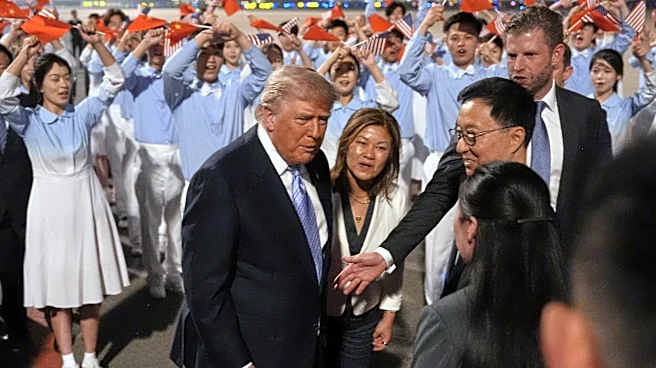
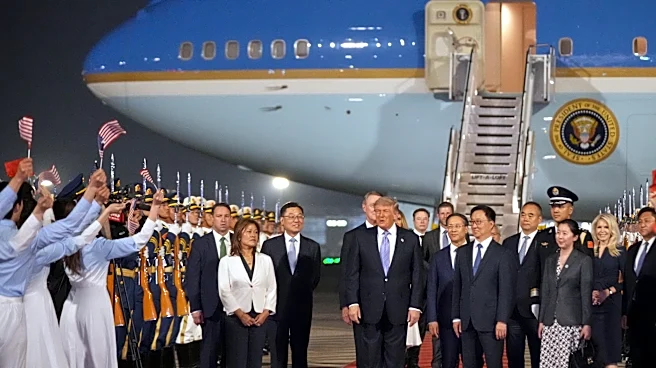
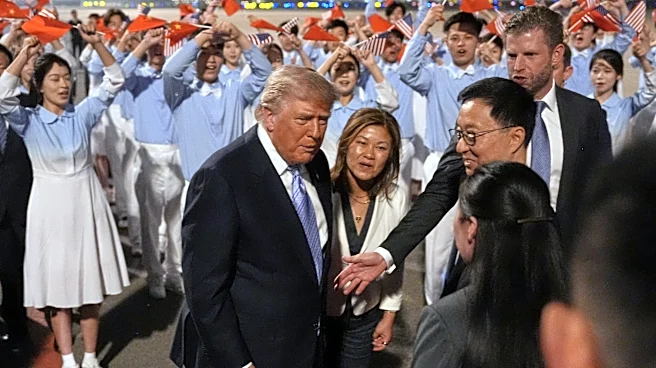
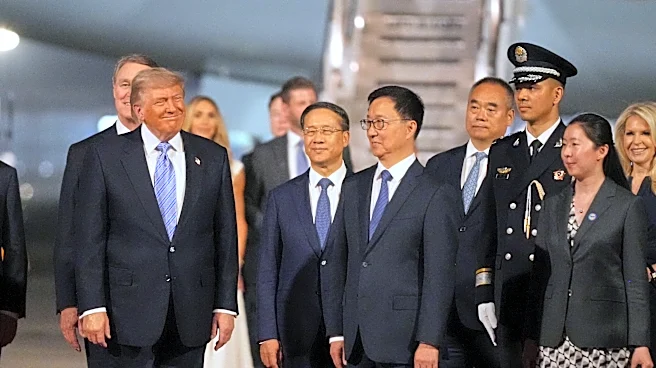
During a high-stakes summit in Beijing, U.S. President Donald Trump and Chinese President Xi Jinping agreed to develop a 'constructive China-U.S. relationship of strategic stability.' This meeting, held
at the Great Hall of the People on May 14, 2026, aimed to address ongoing tensions between the two nations, particularly concerning Taiwan. Xi Jinping emphasized Taiwan as the 'most important issue in U.S.-China relations,' warning that mishandling it could lead to conflict. The summit also focused on enhancing cooperation in economic and trade issues, with both leaders agreeing to use diplomatic and military communication channels more effectively. The meeting was attended by business leaders from major American companies, highlighting the economic stakes involved.
Why It's Important?
The summit between President Trump and Xi Jinping is significant as it attempts to stabilize U.S.-China relations, which have been strained over issues like intellectual property, human rights, and trade. Taiwan remains a critical point of contention, with China's insistence on its territorial claim and the U.S.'s ambiguous stance on military intervention. The outcome of this summit could influence global economic and political dynamics, as both nations are major players on the world stage. The agreement to pursue a 'constructive' relationship suggests a potential easing of tensions, which could benefit global markets and international diplomacy. However, the emphasis on Taiwan indicates that this issue will continue to be a flashpoint in bilateral relations.
What's Next?
Following the summit, both countries are expected to implement the agreed-upon framework of 'strategic stability' through concrete actions. This includes enhancing economic cooperation and maintaining open communication channels to manage differences. The U.S. and China will likely continue to engage in diplomatic discussions to address the Taiwan issue, with potential implications for U.S. foreign policy and military strategy in the region. The involvement of American business leaders suggests that economic ties will be a focus, potentially leading to increased trade and investment opportunities. However, the risk of conflict over Taiwan remains, necessitating careful diplomatic navigation.