










What's Happening?
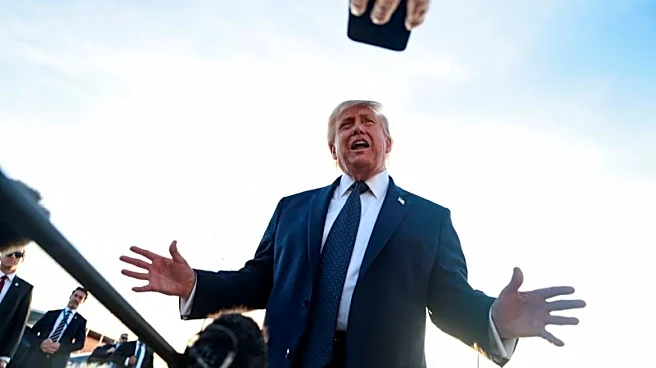
President Donald Trump has expressed concerns that he may be the last Republican president unless the Senate filibuster is terminated. In a post on Truth Social, Trump criticized those opposing the termination of the filibuster, labeling them as 'fools.'
He argued that Democrats would quickly abolish the filibuster if they gained power, which he believes would lead to the destruction of the country. Trump has previously advocated for ending the filibuster, a Senate procedure that allows for prolonged debate to delay or prevent a vote on a bill. Currently, a three-fifths majority, or 60 votes, is required to end a filibuster. Eliminating it would enable the Republican majority in the Senate to pass legislation with a simple majority, bypassing the need for Democratic support.
Why It's Important?
The debate over the filibuster is significant as it impacts the legislative process in the U.S. Senate. The filibuster serves as a tool for the minority party to influence legislation, requiring a supermajority to pass most bills. If the filibuster were terminated, it would shift the balance of power, allowing the majority party to pass legislation more easily. This change could lead to significant policy shifts, depending on which party holds the majority. For Republicans, ending the filibuster could facilitate the passage of their legislative agenda without needing bipartisan support. However, it also raises concerns about the erosion of minority party rights and the potential for more extreme swings in policy with changes in the majority party.
What's Next?
The future of the filibuster remains uncertain, with ongoing debates among lawmakers about its role in the legislative process. If Republicans decide to pursue its termination, it could lead to significant changes in how the Senate operates. This decision would likely provoke strong reactions from both parties, with Democrats potentially seeking to restore or modify the filibuster if they regain control. The outcome of this debate could have lasting implications for the legislative process and the ability of future administrations to implement their agendas.