






What's Happening?
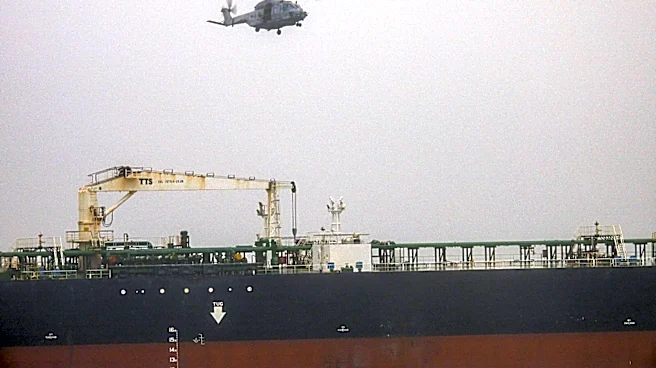
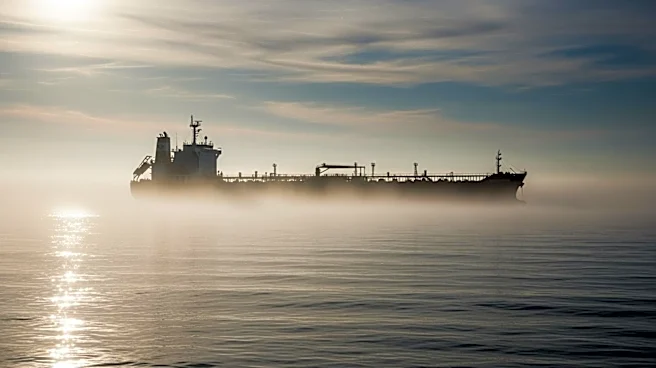
French troops boarded a sanctioned crude oil tanker, the Tagor, in the Atlantic Ocean on May 31. The tanker, suspected of sailing under a false flag, was intercepted over 400 nautical miles west of Brittany, France. The vessel, which was traveling from
Murmansk, Russia, was reportedly heading to Cameroon. French authorities, working with British partners, confirmed suspicions about the flag being flown falsely under Madagascar, although the crew claimed it was Cameroon. The tanker is being escorted to a bay near Brest, France, for further investigation by prosecutors. The Tagor has been under scrutiny since 2024, with its management reportedly based in the UAE. It was previously sanctioned by the United States, the EU, and the UK. French President Emmanuel Macron has been advocating for actions against shadow fleet tankers, emphasizing the financial impact of delays.
Why It's Important?
The interception of the Tagor highlights ongoing international efforts to enforce sanctions and prevent illegal activities by shadow fleet tankers. This action underscores France's commitment to maritime security and the enforcement of international sanctions, particularly against Russian entities. The incident also reflects broader geopolitical tensions, as Russian officials have labeled the seizure as illegal and an act of piracy. The situation could strain diplomatic relations and impact global oil markets, given the involvement of a sanctioned Russian tanker. The enforcement actions serve as a deterrent to other vessels operating under false pretenses, aiming to uphold international maritime laws and sanctions.
What's Next?
The Tagor is expected to arrive near Brest, France, where prosecutors will continue their investigation. The outcome of this case could set a precedent for future actions against similar vessels. French authorities may face diplomatic challenges, particularly with Russia, as they navigate the legal and political ramifications of the seizure. The international community will likely monitor the situation closely, as it could influence future maritime security policies and enforcement strategies. The case may also prompt discussions on enhancing international cooperation to address the challenges posed by shadow fleet operations.