










What's Happening?
Saudi Arabia has reinforced its commitment to protecting children in Yemen through a new $1.55 million partnership between the Saudi aid agency KSrelief and the World Health Organization (WHO). This collaboration aims to provide lifesaving nutrition and medical
care for children suffering from severe acute malnutrition with medical complications. Dr. Abdullah Al-Rabeeah, supervisor general of KSrelief, emphasized that these therapeutic medical interventions, including medicines, equipment, and other necessary supplies, will help children recover and improve their chances for a healthy future. Dr. Abdullah Al-Moallem, director of the Health and Environmental Aid Department at KSrelief, stated that the agreement reflects the center's ongoing focus on reducing preventable deaths among Yemen's most vulnerable children. The 12-month project will involve the WHO procuring and distributing 402 pediatric and severe acute malnutrition kits, containing essential oral and injectable medicines, IV fluids, supplies, and equipment, to 35 therapeutic feeding centers. This initiative is expected to directly benefit approximately 18,282 children under the age of five and will be implemented in close coordination with Yemen's Ministry of Public Health and Population.
Why It's Important?
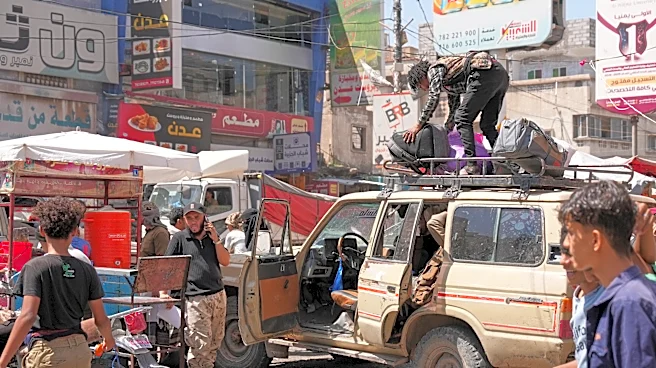
This partnership is crucial given Yemen's deepening food insecurity, which has left millions of children vulnerable to malnutrition after more than a decade of instability, economic collapse, and disruptions to food supply chains. According to the UN World Food Programme, 18.3 million people in Yemen face acute food insecurity, with 2.2 million children under the age of five suffering from acute malnutrition. Yemen's reliance on importing around 90 percent of its food makes its population highly susceptible to disruptions in trade routes, supply chains, and markets. WFP monitoring indicates that 74 percent of households cannot meet their basic food needs, the highest level recorded this year. The WHO has warned that malnutrition remains a significant threat to child survival in Yemen, and children with severe acute malnutrition and medical complications require specialized inpatient treatment and timely access to appropriate medicines. This initiative directly addresses a critical humanitarian need, aiming to reduce child mortality and improve health outcomes for the most vulnerable population segment.
What's Next?
Over the next 12 months, the project will focus on the procurement and distribution of essential medical supplies and nutrition kits to 35 therapeutic feeding centers across priority areas in Yemen, including Abyan, Aden, Al-Dhale’e, Al-Mahrah, Al-Mukalla, Lahj, Marib, Seiyun, Shabwah, Socotra, and Taiz. The implementation will be closely coordinated with Yemen's Ministry of Public Health and Population to ensure efficient distribution based on facility caseloads and utilization rates. This will help maintain essential services at these centers and improve the availability, quality, and continuity of child nutrition care. The agreement also builds on the longstanding partnership between the WHO and KSrelief, suggesting continued collaborative efforts to sustain health and nutrition services in Yemen. The project aims to reduce preventable illness and deaths among young children while simultaneously strengthening the resilience of Yemen's health system, especially as the WHO reports a complex health emergency with increasing cases of cholera, measles, dengue, and malaria.
Beyond the Headlines
This initiative, while addressing immediate life-saving needs, also highlights the broader challenges of humanitarian aid in conflict zones. The decade of instability in Yemen has not only led to economic collapse and food supply chain disruptions but has also severely weakened the country's healthcare infrastructure. The partnership between KSrelief and WHO is a testament to the critical role international cooperation plays in mitigating the devastating effects of prolonged crises. However, the underlying issues of conflict and political instability continue to pose significant obstacles to long-term recovery and self-sufficiency. The project's focus on therapeutic feeding centers underscores the severity of the malnutrition crisis, which can have lasting impacts on the physical and cognitive development of an entire generation. This situation also brings to light the ethical considerations of providing aid in a context where the root causes of suffering remain unaddressed, emphasizing the need for sustained diplomatic efforts towards peace and stability in Yemen.