
What's Happening?
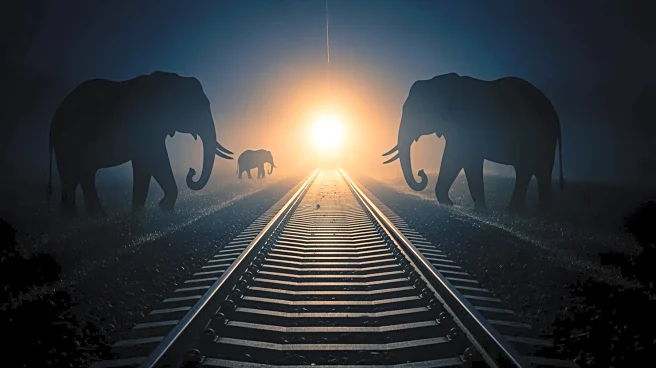
In India's northeastern state of Assam, a high-speed passenger train collided with a herd of wild Asiatic elephants, resulting in the deaths of seven elephants and injuries to a calf. The incident occurred
early Saturday as the train was traveling from Sairang in Mizoram state to New Delhi. Despite the train driver's attempt to use emergency brakes upon spotting the herd, the collision was unavoidable. The impact caused the derailment of five train coaches and the engine, although no human casualties were reported. The accident site, located about 78 miles southeast of Assam's capital, Guwahati, is not a designated elephant corridor, though the region's railway tracks are frequently traversed by elephants. Indian Railways has stated that trains passing through the country's 150 wildlife corridors are mandated to reduce speed to prevent such collisions.
Why It's Important?
This tragic event highlights the ongoing conflict between wildlife and human infrastructure development in India, particularly in regions like Assam, which is home to a significant population of wild Asiatic elephants. The incident underscores the challenges of balancing conservation efforts with the expansion of transportation networks. The frequent occurrence of such accidents, with an average of 20 elephants killed annually by trains, raises concerns about the effectiveness of current measures to protect wildlife. The Indian government has initiated steps such as opening an elephant hospital and implementing AI-enabled surveillance systems to mitigate these risks. However, the persistence of these incidents suggests a need for more comprehensive strategies to ensure the safety of both wildlife and human passengers.
What's Next?
In response to this incident, there may be increased pressure on Indian Railways and government authorities to enhance safety measures along railway tracks that intersect with wildlife habitats. This could involve revisiting speed regulations, expanding designated elephant corridors, and investing in advanced technologies for early detection and prevention of wildlife crossings. Additionally, conservation groups and environmentalists are likely to advocate for more robust policies to protect endangered species and their habitats. The incident may also prompt discussions on the broader implications of infrastructure development on biodiversity and the need for sustainable planning.
Beyond the Headlines
The collision raises ethical questions about the responsibility of human societies to coexist with wildlife, particularly in regions where natural habitats are increasingly encroached upon by development projects. It also highlights the cultural significance of elephants in India, where they are revered and play a vital role in the ecosystem. The incident could lead to a reevaluation of how infrastructure projects are planned and executed, with a greater emphasis on environmental impact assessments and community involvement in decision-making processes. Long-term, this could influence policy changes aimed at integrating conservation priorities into national development agendas.