


What's Happening?
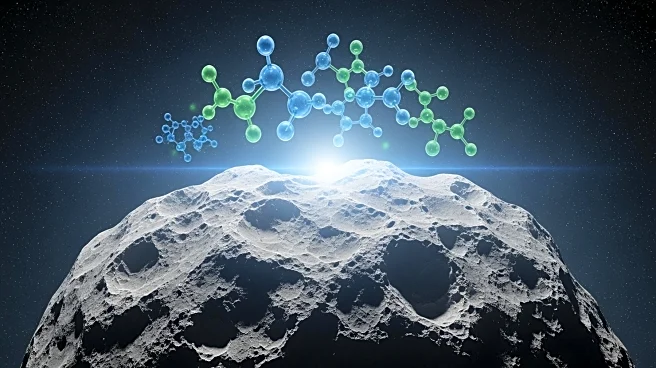
NASA astronauts aboard the International Space Station have successfully conducted an experiment using microorganisms to mine meteorites. This experiment, led by researchers from Cornell University and the University of Edinburgh, involved NASA astronaut Michael
Scott Hopkins. The study focused on using two microorganisms, Sphingomonas desiccabilis and Penicillium simplicissimum, to extract precious metals from meteorites in a low-gravity environment. The microorganisms produce carboxylic acids that attach to minerals in the meteorites, facilitating their release into a liquid solution. The experiment aimed to compare the effectiveness of this method in space versus on Earth, revealing that space conditions altered the microbial metabolism, enhancing the release of valuable elements like palladium and platinum.
Why It's Important?
This development is significant as it demonstrates a potential method for resource production in space, which could reduce the costs associated with long-term space travel. By mining materials in space rather than transporting them from Earth, space agencies and companies can significantly cut expenses. The ability to extract valuable metals like palladium, which has specialized uses in technology, could also have economic implications. This experiment represents a step forward in utilizing space environments for industrial purposes, potentially leading to more sustainable space exploration missions.
What's Next?
The success of this experiment may lead to further research and development of space-based mining techniques. Future studies could explore the scalability of this method and its application to other celestial bodies, such as asteroids. Space agencies might consider integrating microbial mining into their resource acquisition strategies for upcoming missions. Additionally, the findings could prompt discussions on the ethical and environmental implications of space mining, as well as the need for international regulations governing the extraction of extraterrestrial resources.