





What's Happening?
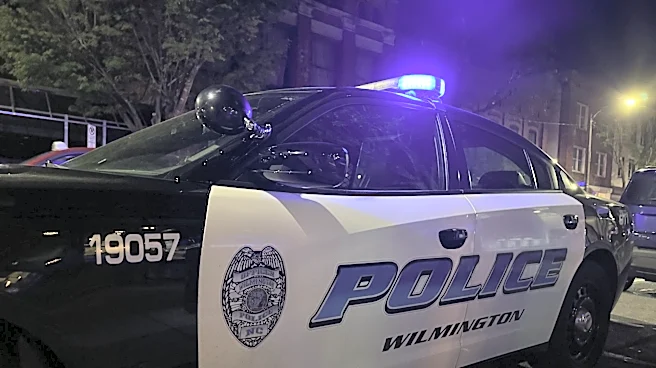
An interfaith service was held in Wilmington, Delaware, to honor 19-year-old Kadir Skinner, who was fatally shot by a Wilmington police officer on June 24. Loved ones and civil rights leaders gathered at Shiloh Baptist Church to remember Skinner and advocate
for truth, transparency, and justice. Skinner's family expressed their grief and frustration over the lack of answers 61 days after his death. According to investigators, a Wilmington police officer shot Skinner after he allegedly pointed a gun into a crowd and then at officers. Body camera footage released by police the following month showed an officer pursuing Skinner, and a loaded handgun was reportedly recovered at the scene. However, Skinner's family attorneys contend that he was running from a dog and was unaware police were chasing him when he was shot in the back, and Skinner can be heard on the video stating he did not have a weapon.
Why It's Important?
This event underscores significant tensions between law enforcement and community members, particularly concerning police use of force and accountability. The family's demand for transparency and justice highlights a broader national conversation about police conduct, civil rights, and the legal processes that follow officer-involved shootings. The involvement of civil rights leaders, such as Bishop William Barber II, elevates the local incident to a matter of national concern, drawing attention to systemic issues. The ongoing investigation by the Delaware Department of Justice, coupled with the family's $25 million lawsuit against the city of Wilmington, indicates the potential for significant legal and social ramifications. This case could influence future police training, policies on body camera usage, and the handling of similar incidents across the U.S., impacting public trust in law enforcement and the justice system.
What's Next?
The investigation into Kadir Skinner's death by the Delaware Department of Justice is ongoing, and no timeline has been provided for the release of additional details or formal findings. Skinner's family, supported by their legal team and civil rights leaders, will continue to press for answers and accountability. The $25 million lawsuit filed against the city of Wilmington will proceed, potentially leading to a protracted legal battle. Community members and advocates are expected to maintain pressure on public officials to ensure a thorough and transparent investigation. The outcome of this case could set precedents for how similar incidents are handled in Delaware and potentially influence broader discussions on police reform and justice nationwide.
Beyond the Headlines
The tragic death of Kadir Skinner and the subsequent community response reveal deeper societal issues related to racial justice, police accountability, and the impact of violence on marginalized communities. The conflicting narratives—investigators' claims versus the family's account and the body camera footage—highlight the complexities and challenges in establishing truth in such cases. This incident contributes to the ongoing national dialogue about the need for comprehensive police reform, including de-escalation training, independent oversight, and improved community-police relations. The emotional toll on Skinner's family and the community, coupled with the legal and political ramifications, underscores the urgent need for systemic changes to prevent similar tragedies and foster a more equitable justice system. The case also brings to light the role of media and public discourse in shaping perceptions and driving calls for change.