
What's Happening?
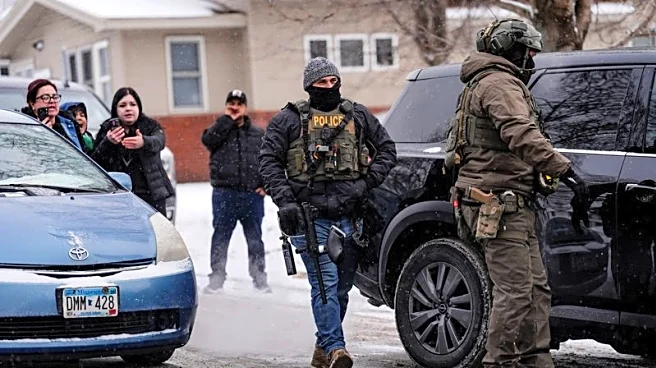
Federal immigration agents have increasingly utilized a once-obscure law, 18 US Code 111, to detain American citizens during protests against immigration enforcement. This statute makes it illegal to forcibly assault, resist, oppose, impede, intimidate,
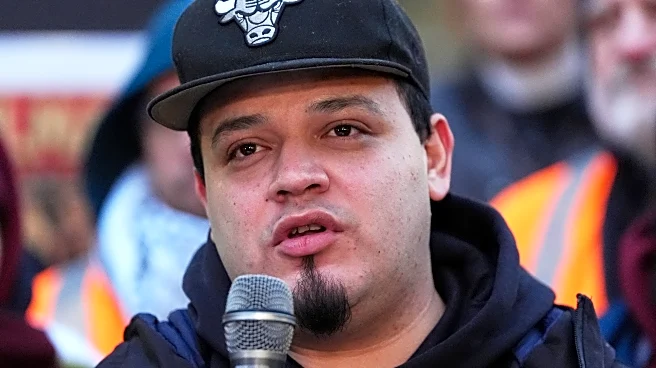
or interfere with a federal officer performing their duties. The Trump administration has expanded the use of this law, particularly in cities like Minneapolis, Chicago, Los Angeles, and Portland, where protests have been intense. Despite the increase in arrests, many cases have been dismissed or resulted in acquittals, raising questions about the law's application. Legal experts argue that the statute is being used to target activities protected by the First Amendment, such as recording and protesting ICE operations.
Why It's Important?
The use of 18 US Code 111 by immigration agents highlights significant legal and civil rights concerns. The statute's application to detain protesters and observers could have chilling effects on free speech and the right to protest. The high rate of dismissals and acquittals suggests potential misuse of the law, which could undermine public trust in law enforcement and the justice system. This development is particularly relevant in the context of ongoing debates about immigration policy and enforcement in the U.S., as well as the balance between national security and civil liberties.
What's Next?
As legal challenges continue, the future application of 18 US Code 111 remains uncertain. The Department of Homeland Security and the Department of Justice may face increased scrutiny over their enforcement practices. Civil rights organizations are likely to continue advocating for the protection of First Amendment rights, potentially leading to further legal battles. The outcome of these cases could influence future immigration enforcement strategies and the legal framework governing protests and civil disobedience.
Beyond the Headlines
The broader implications of this issue extend to the cultural and ethical dimensions of law enforcement in the U.S. The tension between federal authorities and local communities reflects deeper societal divides over immigration and civil rights. The use of federal statutes to suppress dissent raises questions about the role of government in regulating public expression and the potential for overreach. These developments may prompt a reevaluation of legal standards and the protection of individual rights in the context of national security.