







What's Happening?
A five-year investigation by The Outlaw Ocean Project, a journalistic nonprofit led by former New York Times reporter Ian Urbina, has revealed concerning practices within the seafood supply chain. The probe, involving over 70 reporters, found that farmed
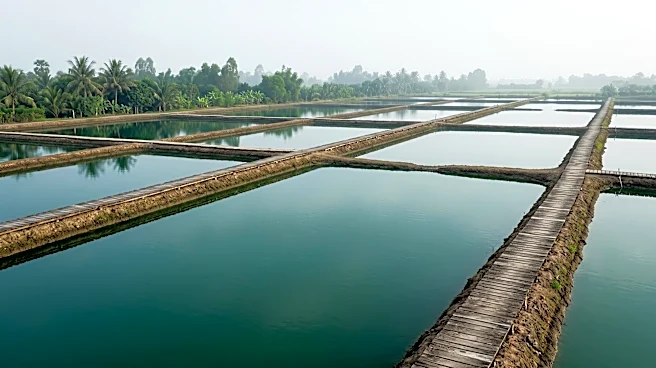
fish, including popular U.S. seafood like salmon and shrimp, can be linked to forced labor, rancid waste, and harmful chemicals. The investigation highlights that more than half of the seafood consumed today comes from aquaculture, or fish farming, rather than wild-caught sources. However, these farmed fish are often fed with smaller wild fish, meaning vast quantities of ocean fish are caught to sustain the aquaculture industry. A fifth of all fish pulled from the world's oceans is now used for fishmeal and fish oil, rather than direct human consumption. Urbina conducted extensive fieldwork, including six sea voyages and visits to fishmeal factories and aquaculture sites across multiple countries, to document these issues.
Why It's Important?
This investigation is important because it exposes the hidden environmental and ethical costs associated with the seafood consumed in the United States. The reliance on fishmeal to feed farmed fish creates a significant demand for wild-caught fish, putting additional pressure on ocean ecosystems. The findings suggest that the price consumers pay for seafood does not reflect the full societal and environmental impact, particularly on developing countries where many of these practices occur. For U.S. consumers, this means that popular seafood items found in supermarkets and restaurants, including those served to lawmakers on Capitol Hill, may be contributing to unsustainable and unethical supply chains. The revelations could prompt increased scrutiny of seafood sourcing and potentially influence consumer choices and industry regulations.
What's Next?
The Outlaw Ocean Project has launched a "Bait to Plate" tool, which Ian Urbina hopes other journalists will utilize to trace seafood from its origins to consumers, identifying potential crimes or concerns within these supply chains. This tool aims to increase transparency and accountability within the seafood industry. The investigation's findings are expected to encourage governments in advanced economies to address how they are shifting costs onto developing countries. Consumers are also being urged to consider how they can buy and eat seafood more responsibly. The ongoing efforts to expose these issues could lead to calls for stricter regulations, improved industry practices, and greater consumer awareness regarding the origins and production methods of their seafood.
Beyond the Headlines
Beyond the immediate concerns of forced labor and environmental damage, this investigation touches upon the broader ethical implications of global food production and consumption. It highlights a systemic issue where the pursuit of affordable and abundant food, particularly protein, can lead to exploitation and ecological degradation in less regulated regions. The reliance on fishmeal for aquaculture raises questions about the efficiency and sustainability of current food systems, suggesting a potential misallocation of marine resources. The investigation also underscores the power of investigative journalism in uncovering complex, transnational issues that often remain hidden from public view, prompting a reevaluation of the true cost of convenience and affordability in the global marketplace.