



What's Happening?
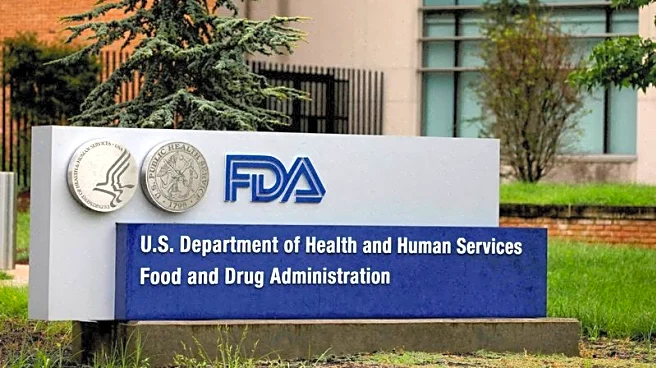
Drug Farm has announced that the U.S. Food and Drug Administration (FDA) has accepted its investigational therapy, DF-003, into the Rare Disease Evidence Principles Process (RDEP). This initiative aims to facilitate early dialogue between the FDA and sponsors
developing therapies for rare diseases. DF-003 is being developed as a potential treatment for ROSAH syndrome, a rare autoinflammatory disorder caused by mutations in the ALPK1 gene. The disease is characterized by retinal degeneration, optic nerve edema, systemic inflammation, and progressive vision loss. Currently, there are no approved therapies specifically indicated for ROSAH syndrome. The acceptance into the RDEP program will allow Drug Farm to engage in structured discussions with the FDA regarding the development of DF-003, including clinical trial design and evidence generation strategies.
Why It's Important?
The acceptance of DF-003 into the RDEP program is significant as it provides Drug Farm with an opportunity for early collaboration with the FDA, potentially accelerating the development of treatments for ROSAH syndrome. Given the rarity of the disease and the absence of approved treatments, this collaboration could lead to more efficient development strategies and faster progress toward potential therapies. The initiative underscores the FDA's commitment to supporting the development of treatments for rare diseases, which often face challenges due to small patient populations and limited clinical evidence. Successful development of DF-003 could provide a much-needed therapeutic option for patients suffering from ROSAH syndrome.
What's Next?
Drug Farm plans to initiate further clinical development activities for DF-003 following discussions with the FDA through the RDEP program. These activities will likely include designing clinical trials and generating evidence to demonstrate the drug's clinical benefit. The company aims to advance DF-003 for patients with ROSAH syndrome, leveraging the insights gained from the RDEP program to inform its development strategies. The outcome of these discussions and subsequent trials will be crucial in determining the future availability of DF-003 as a treatment option for ROSAH syndrome.