






What's Happening?
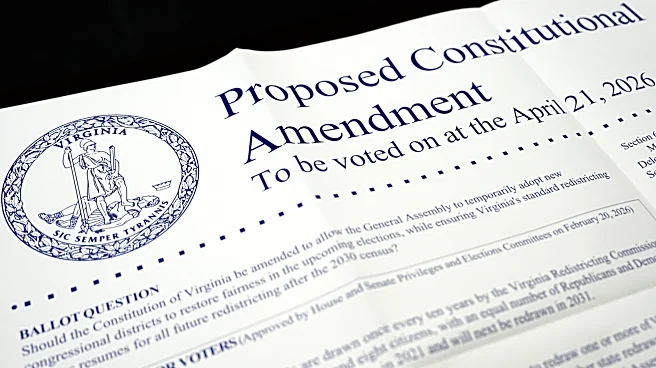
The Virginia Supreme Court has invalidated a redistricting amendment due to timing issues related to early voting. The amendment, which aimed to allow the legislature to redraw Virginia's congressional districts mid-decade, was passed by voters but challenged
in court. The court ruled that the amendment process violated the state constitution's requirement for an intervening election between legislative approvals. This decision means Virginia will continue using the court-drawn maps from 2021, maintaining the current partisan balance.
Why It's Important?
This ruling emphasizes the importance of procedural compliance in constitutional amendments and highlights the complexities of redistricting in the context of early voting. The decision prevents a potential shift in Virginia's congressional representation that could have favored Democrats, maintaining the status quo. It also underscores the judiciary's role in upholding constitutional processes, even against popular voter-approved measures, and may influence future legislative strategies in Virginia and other states.
What's Next?
Virginia officials have appealed to the U.S. Supreme Court, seeking further review of the state court's decision. The outcome of this appeal could have broader implications for state-level redistricting efforts and the balance of power between state and federal judicial interpretations. The ongoing legal battles in Virginia reflect a larger national trend of contentious redistricting debates, with potential impacts on future elections and party control.