



What's Happening?
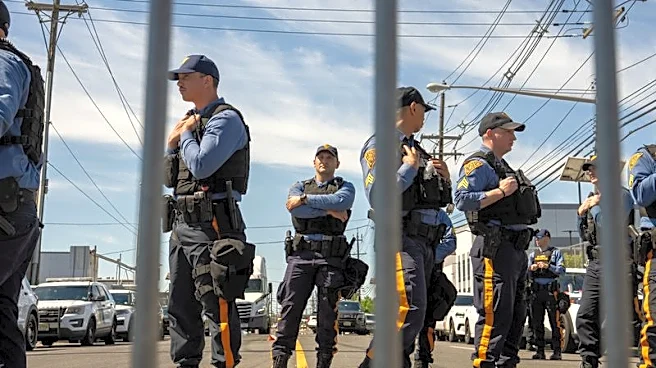
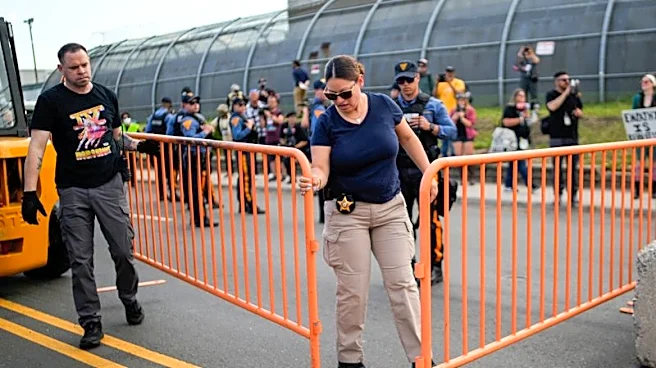
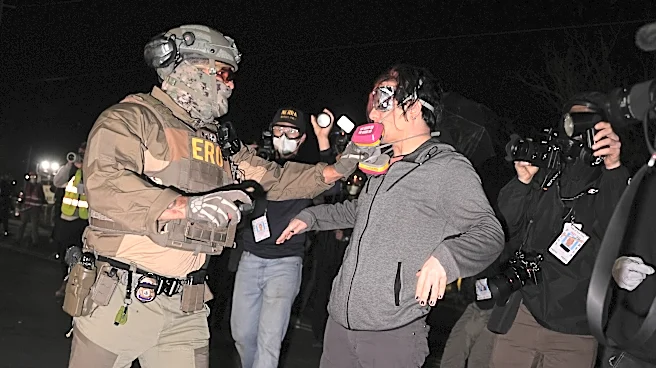
Newark Mayor Ras Baraka has implemented a nightly curfew around Delaney Hall, an ICE facility, in response to escalating tensions between protesters and law enforcement. The curfew, effective immediately, restricts pedestrian traffic on Doremus Avenue
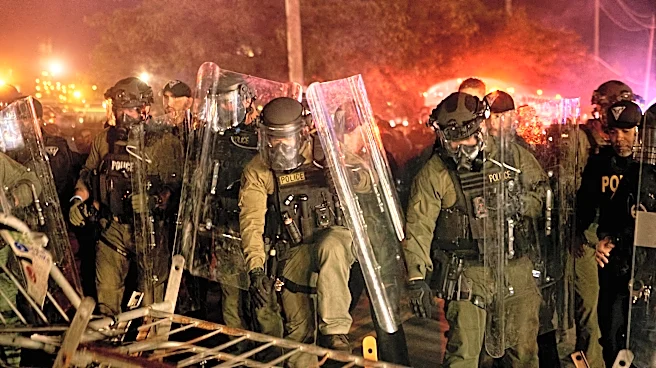
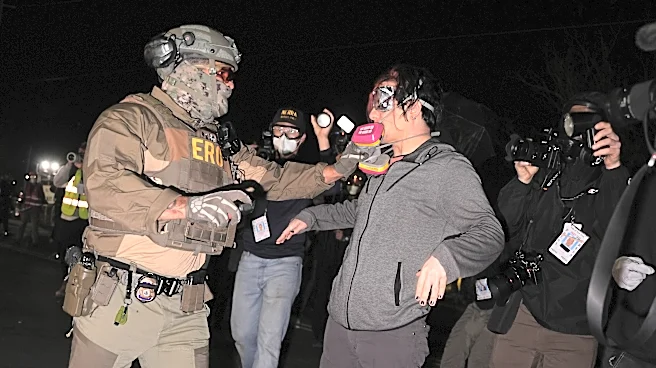
from 9 p.m. to 6 a.m. and limits vehicle access to those with official business. This decision follows several nights of clashes between protesters and state police, who were deployed by Governor Mikie Sherrill to manage the situation. Protesters are demanding better conditions for detainees, citing issues such as inedible food and lack of medical care. The protests have seen significant participation, including counter-protesters like the Proud Boys, leading to heightened tensions. On Saturday, protesters set a large fire on Doremus Avenue, prompting further police intervention.
Why It's Important?
The imposition of a curfew highlights the growing unrest and the challenges faced by local authorities in balancing public safety with the right to protest. The situation at Delaney Hall reflects broader national debates on immigration policies and detainee treatment. The presence of groups like the Proud Boys adds a layer of complexity, potentially escalating tensions further. The curfew aims to prevent violence and ensure safety, but it also raises questions about the limits of protest rights and the role of law enforcement in managing civil unrest. The outcome of these protests could influence public opinion and policy decisions regarding immigration and law enforcement practices.
What's Next?
Authorities are likely to maintain a strong law enforcement presence around Delaney Hall to enforce the curfew and manage protests. The situation may prompt further legal and political discussions about detainee rights and protest management. Community leaders and civil rights organizations might engage in dialogue with officials to address the protesters' concerns and seek peaceful resolutions. The ongoing protests could also lead to increased scrutiny of ICE facilities nationwide, potentially influencing future immigration policies and reforms.