
What's Happening?
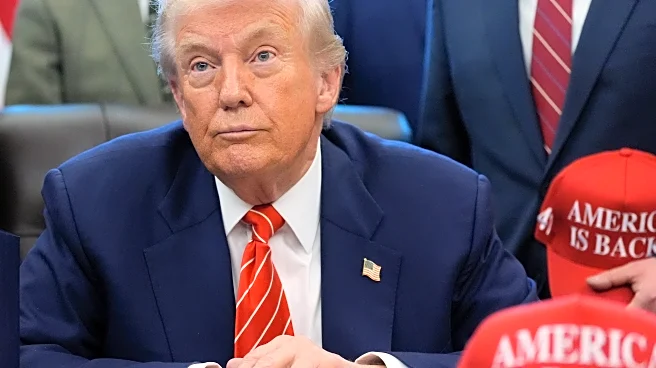
President Donald Trump announced plans to invite Kazakhstan and Uzbekistan to the upcoming G20 summit in Miami, scheduled for 2026. This decision follows recent phone calls with the leaders of both countries,
Kazakhstan President Kassym-Jomart Tokayev and Uzbekistan President Shavkat Mirziyoyev. Although neither nation is a member of the G20, the host country often extends invitations to non-member states. The move is part of a broader strategy to strengthen U.S. ties with Central Asian countries, which are rich in minerals and play a significant role in the global supply of uranium. This initiative aligns with the U.S. administration's focus on securing rare earth metals essential for high-tech industries. Additionally, Kazakhstan's recent decision to join the Abraham Accords, an initiative to foster relations between Israel and Muslim-majority countries, underscores the growing diplomatic engagement in the region.
Why It's Important?
The inclusion of Kazakhstan and Uzbekistan in the G20 summit highlights the U.S. administration's strategic interest in Central Asia, a region pivotal for its mineral resources. This engagement could shift the balance of trade and influence away from China and Russia, who have traditionally dominated the region's exports. By fostering closer ties, the U.S. aims to secure critical materials necessary for technological advancements, potentially reducing dependency on other global powers. This move also reflects a broader geopolitical strategy to enhance U.S. influence in regions with significant economic and strategic potential. The decision to invite these countries to the G20 summit could lead to increased diplomatic and economic collaboration, benefiting U.S. industries reliant on rare earth elements.
What's Next?
The upcoming G20 summit in Miami will serve as a platform for further discussions on economic cooperation and strategic partnerships between the U.S. and Central Asian nations. The U.S. administration may continue to pursue similar diplomatic engagements with other non-G20 countries to expand its influence and secure essential resources. Additionally, the participation of Kazakhstan and Uzbekistan could lead to new trade agreements or joint ventures in sectors like technology and energy. The U.S. may also leverage this opportunity to promote its foreign policy objectives, such as the Abraham Accords, by encouraging more countries to join the initiative.