



What's Happening?
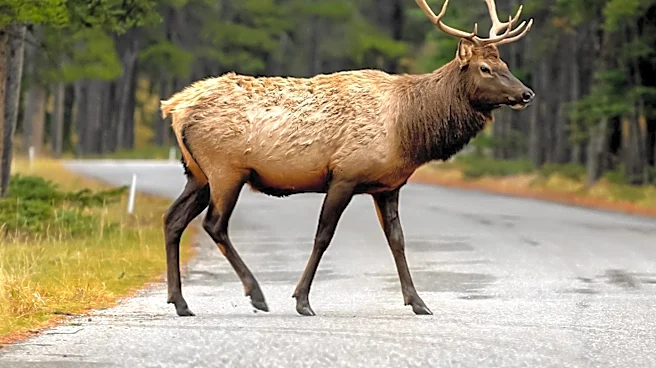
A significant wildlife underpass project has been completed on U.S. 30 in southeast Idaho, near Montpelier. This initiative involved the construction of three new underpasses designed to facilitate the safe migration of deer and other wildlife, thereby
reducing vehicle collisions. The project, known as Rocky Point, is the culmination of decades of collaboration among state agencies, conservation groups, and local communities, including Idaho Fish and Game, the Idaho Transportation Department (ITD), and the Greater Yellowstone Coalition. Historically, approximately 100 mule deer were killed annually in collisions on a 20-mile stretch of U.S. 30 south of Montpelier, with most incidents occurring within the five-mile Rocky Point area. ITD project manager Bo Frasure emphasized that the project's necessity was evident, as funneling wildlife through underpasses keeps animals off the road and away from traffic.
Why It's Important?
This project holds significant importance for public safety, wildlife conservation, and economic well-being in Idaho. Wildlife-vehicle collisions cost the state an estimated $143.7 million annually. The implementation of underpasses, often paired with fencing, has been shown to reduce collisions with large animals by up to 97%, while simultaneously preserving crucial migration corridors. This not only saves lives and prevents injuries for both humans and animals but also mitigates substantial economic losses associated with property damage, medical expenses, and lost productivity. The success of this project, following the state's first wildlife overpass near Boise which reported no collisions in its first year, demonstrates a viable and effective strategy for addressing a widespread issue across the U.S. The legislative support for wildlife crossings further underscores their recognized benefits for public safety and conservation.
What's Next?
The completion of the Rocky Point project is expected to significantly reduce wildlife-vehicle collisions in the area, with ongoing monitoring likely to assess its effectiveness. The project received a $20.8 million grant from the Federal Highway Administration’s wildlife crossing pilot program, part of the Infrastructure Investment and Jobs Act of 2021, which authorized $350 million for wildlife crossings nationwide. An additional $1.2 million from USDA funds will support fencing to connect two of the Rocky Point structures within the mule deer migration route. This success is anticipated to generate momentum for similar projects across Idaho and potentially serve as a model for other states facing similar challenges. Continued federal funding for such initiatives will be crucial for expanding these efforts and achieving broader ecological and safety benefits.
Beyond the Headlines
The Rocky Point project exemplifies a growing national trend towards integrating ecological considerations into infrastructure development. It highlights the power of multi-stakeholder collaboration, involving government agencies, conservation organizations, and local landowners, in achieving complex environmental and safety goals. The project's success also underscores the economic rationale behind wildlife crossings, demonstrating that such investments can pay for themselves through reduced collision costs. Furthermore, the involvement of local landowners, like Kolby Romrell, who agreed to migration easements, showcases a shift towards greater community engagement and stewardship in conservation efforts. This collaborative model could inspire future projects that balance human development with the preservation of natural ecosystems and wildlife heritage.