






What's Happening?
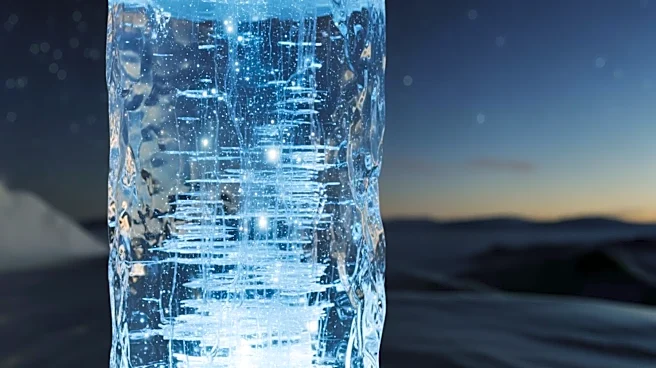
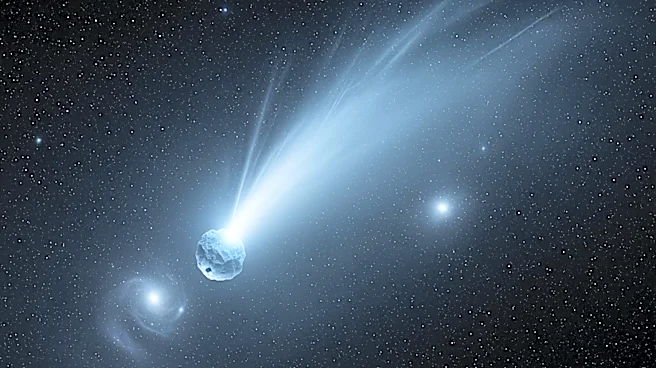
Researchers have discovered stardust trapped in Antarctic ice, providing insights into the Solar System's history over the past 80,000 years. The study, published in Physical Review Letters, focuses on the presence of iron-60, a rare isotope formed in supernovae,
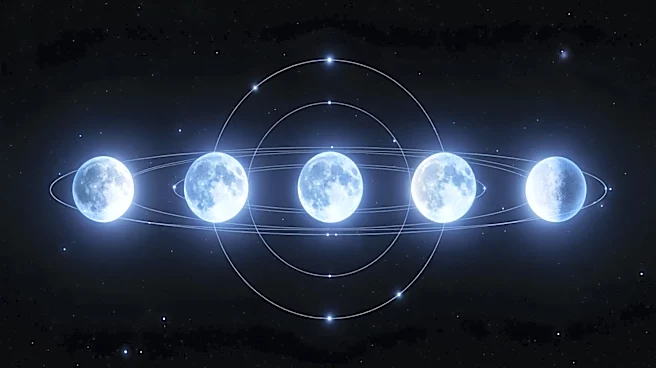
found in Antarctic snow and ice. This stardust offers clues about the Solar System's movement through the Local Interstellar Cloud, a region of interstellar clouds in our galaxy. The research involved analyzing 300kg of Antarctic ice, revealing lower than expected levels of iron-60, suggesting changes in interstellar dust reaching Earth. This finding challenges previous assumptions about the long-term deposition of iron-60 from supernovae and points to a more localized source.
Why It's Important?
The discovery of stardust in Antarctic ice has significant implications for understanding the Solar System's history and its interaction with interstellar environments. By studying these isotopes, scientists can trace astrophysical events like supernovae and gain insights into the formation and evolution of the Solar System. This research also highlights the importance of Antarctic ice as a geological archive, preserving records of cosmic events. The findings could lead to a better understanding of the dynamics of interstellar clouds and their impact on Earth, influencing future studies in astrophysics and planetary science.
Beyond the Headlines
The study of stardust in Antarctic ice opens new avenues for exploring the history of interstellar clouds and their origins. The presence of iron-60 in ice layers suggests a complex interaction between the Solar System and its cosmic environment. This research challenges existing models of interstellar cloud formation and could lead to revisions in our understanding of cosmic dust distribution. The findings also underscore the potential of using Earth's geological records to study distant astrophysical phenomena, offering a unique perspective on the universe's history.