







What's Happening?
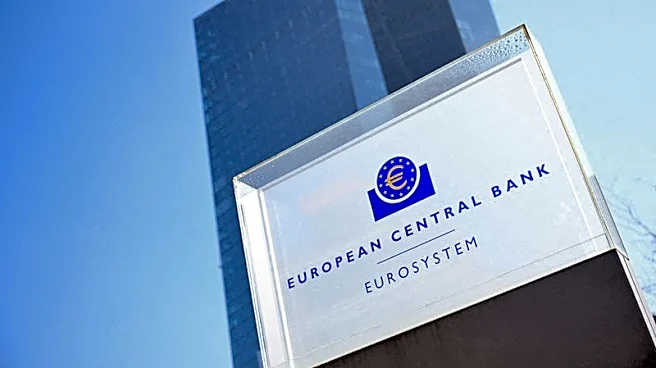
The European Central Bank (ECB) has decided to keep its three key interest rates unchanged, as announced by the Governing Council. This decision comes amidst heightened risks to inflation and economic growth, largely driven by the ongoing war in the Middle
East, which has caused a significant rise in energy prices. The ECB aims to stabilize inflation at its 2% target in the medium term. Despite the current economic challenges, the euro area has shown resilience, with inflation expectations over the long term remaining well anchored. The ECB plans to continue monitoring the situation closely, adopting a data-dependent approach to future monetary policy decisions.
Why It's Important?
The ECB's decision to maintain interest rates is crucial for the euro area's economic stability, especially given the current geopolitical tensions affecting energy prices. By keeping rates steady, the ECB aims to manage inflation without stifling economic growth. This decision impacts not only the euro area but also has broader implications for global markets, including the U.S., as it influences international trade and investment flows. The ECB's approach reflects a cautious stance in navigating economic uncertainties, which could affect financial markets and economic policies worldwide.
What's Next?
The ECB will continue to assess economic data and inflation trends to determine future monetary policy actions. The Governing Council has emphasized its readiness to adjust its instruments to ensure price stability and smooth monetary policy transmission. The ongoing geopolitical situation and its impact on energy prices will be key factors in the ECB's future decisions. Stakeholders, including businesses and investors, will be closely watching the ECB's actions for indications of potential shifts in monetary policy.