


What's Happening?
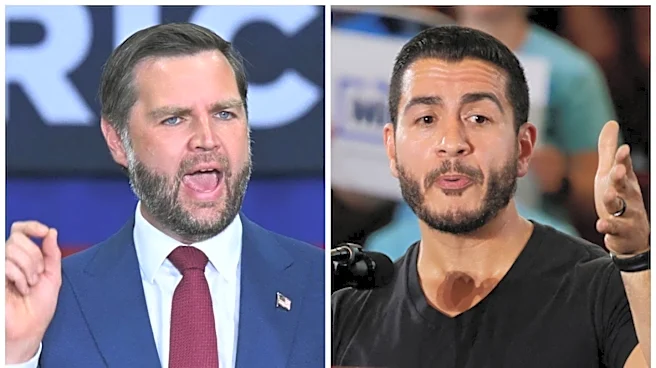
Republican U.S. Senate candidate Mike Rogers has dismissed criticism regarding his commitment to a September 15 debate hosted by Detroit's Fox 2, labeling the controversy as 'made-up nonsense.' Rogers, a former FBI Agent and Congressman, stated during
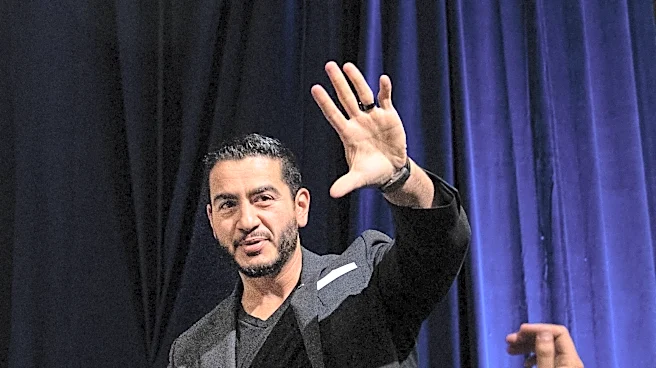
an interview on 760 WJR’s All Talk with Kevin Dietz that his campaign has already agreed to two debates and a candidate forum, asserting that this schedule aligns with previous Senate races. He also suggested that Fox 2 has inserted itself into the campaign. The comments come as Fox 2 and Democratic nominee Abdul El-Sayed continue to press Rogers for a decision on his participation in the Detroit debate. Fox 2 extended invitations to both candidates shortly after the August 4 primary, setting a September 1 response deadline. According to the station, El-Sayed accepted the invitation, while Rogers' campaign had not responded by the deadline. Fox 2 has indicated that the September 15 debate will proceed regardless, with a podium reserved for Rogers should he choose to attend.
Why It's Important?
This dispute over debate participation is significant for the Michigan U.S. Senate race, as debates offer a crucial platform for candidates to present their platforms and engage with their opponents directly before Election Day. For voters, these events are vital for making informed decisions. Rogers' reluctance to commit to the Fox 2 debate could be perceived by some as an attempt to avoid direct confrontation with his Democratic rival, Abdul El-Sayed, potentially impacting voter perception of his transparency and willingness to engage on key issues. Conversely, his argument that the station is inserting itself into the campaign could resonate with voters who are wary of media influence in politics. The El-Sayed campaign is actively using Rogers' non-commitment to highlight the need for more opportunities for voters to hear from both candidates. The outcome of this debate scheduling conflict could influence campaign strategies, media coverage, and ultimately, voter turnout and preferences in a pivotal Senate race.
What's Next?
The September 15 debate hosted by Fox 2 is scheduled to proceed, with a podium available for Mike Rogers, regardless of his prior commitment. This means that if Rogers does not attend, El-Sayed will likely have an unchallenged platform to address voters, potentially gaining an advantage in public perception. The El-Sayed campaign is expected to continue to emphasize Rogers' absence if he does not participate, framing it as a missed opportunity for voters. Meanwhile, Rogers' campaign will likely continue to defend its debate schedule, pointing to the two already agreed-upon debates and the candidate forum as sufficient engagement. The upcoming debates, including one on WXYZ-TV in Detroit on October 21 and an earlier one on WOOD-TV 8 in Grand Rapids on October 8, will be critical for both candidates to articulate their positions and differentiate themselves to Michigan voters. The ongoing debate over debate participation itself may become a recurring talking point in the campaign.
Beyond the Headlines
The controversy surrounding Mike Rogers' debate participation highlights a broader trend in modern political campaigns where candidates strategically manage their media appearances and direct engagements. The decision to accept or decline debate invitations often involves a calculated risk assessment, weighing the potential benefits of exposure against the risks of gaffes or unfavorable comparisons. This situation also underscores the evolving role of local media outlets in political discourse, as Fox 2's decision to proceed with the debate, even with one candidate's non-commitment, asserts its role in facilitating public dialogue. The 'made-up nonsense' claim by Rogers could also reflect a growing distrust or skepticism among some political figures towards traditional media narratives. This dynamic can influence how voters consume and interpret political information, potentially leading to a more fragmented media landscape where candidates prioritize platforms they perceive as more favorable or controlled. Ultimately, such disputes can impact the public's access to comprehensive information about candidates and their stances.