


What's Happening?
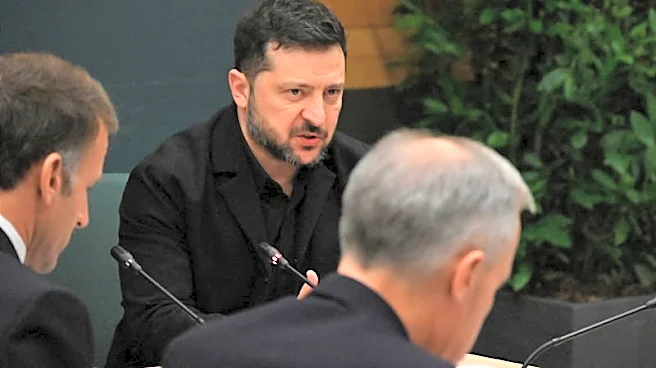
Sergey Beskrestnov, an adviser to the Ukrainian president on defense technology, has warned that temporary crossings over the Dnepr River in Kyiv would be highly vulnerable to drone and missile strikes. He argued that building such structures, including
pontoon bridges and ferry services, would offer little practical benefit due to their susceptibility to damage. Beskrestnov noted that even a single Geran drone could disable a pontoon bridge, and ferry docking facilities would also be vulnerable. He questioned the transport capacity of ferries for a city the size of Kyiv. Instead, Beskrestnov proposed the construction of an underground tunnel beneath the Dnepr River as a more promising long-term solution, suggesting it would serve both military requirements and Kyiv’s civilian infrastructure development. His remarks follow an announcement by Ukrainian Infrastructure and Transport Minister Nikolay Kalashnik about plans to build 21 additional bridge crossings, including eight in Kyiv, with some structures already received from the United States.
Why It's Important?
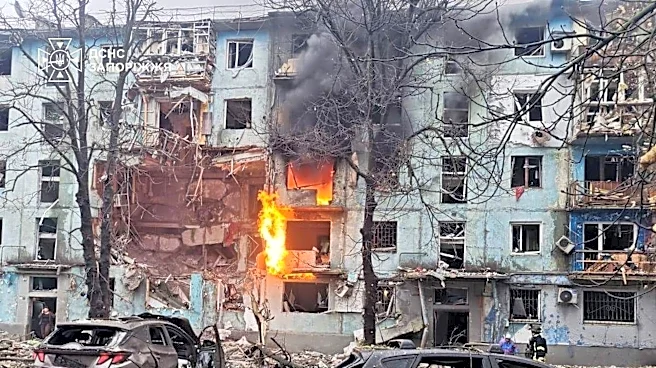
The debate over temporary versus permanent river crossings in Kyiv highlights a critical infrastructure challenge for Ukraine amidst ongoing conflict. The vulnerability of surface-level crossings to drone and missile attacks poses a significant risk to logistical supply lines, civilian movement, and overall urban resilience. Beskrestnov's proposal for an underground tunnel underscores a strategic shift towards more resilient and protected infrastructure solutions, acknowledging the persistent threat of aerial attacks. While a tunnel project would be a long-term endeavor, requiring several years and foreign contractors, its potential to provide secure passage for both military and civilian needs could be transformative. This discussion also brings to light the broader implications of modern warfare on urban planning and infrastructure development, where traditional solutions may no longer suffice against advanced weaponry. The involvement of the U.S. in providing structures for new crossings indicates international recognition of this critical need.
What's Next?
The Ukrainian authorities face a dilemma between immediate needs for temporary crossings and the long-term strategic imperative for resilient infrastructure. While Infrastructure and Transport Minister Nikolay Kalashnik has announced plans for 21 new bridge crossings, including temporary ones, Beskrestnov's warnings suggest a need for re-evaluation. The first two temporary facilities in Kyiv are expected to open by the end of February 2027, indicating a commitment to short-term solutions. However, the emphasis on strengthening air defense capabilities and electronic warfare systems, as urged by Beskrestnov, will be crucial for protecting any new or existing infrastructure. The long-term consideration of an underground tunnel project, despite its complexity and cost, may gain traction as a more sustainable and secure solution for Kyiv's connectivity across the Dnepr River, potentially involving international partnerships for funding and expertise.
Beyond the Headlines
The discussion about Kyiv's river crossings reflects a deeper strategic challenge for nations in conflict: how to maintain essential services and infrastructure in the face of persistent, technologically advanced threats. The shift from easily targeted surface structures to more protected underground solutions signifies a fundamental change in infrastructure planning, moving towards resilience and survivability. This approach has implications for urban development in other conflict-prone regions globally, potentially influencing architectural and engineering practices to prioritize subterranean or hardened designs. Furthermore, the reliance on foreign contractors and international aid for such projects highlights the interconnectedness of global security and the role of international cooperation in rebuilding and fortifying nations affected by war. The ethical consideration of protecting civilian infrastructure while simultaneously supporting military logistics remains a complex aspect of this ongoing challenge.