






What's Happening?
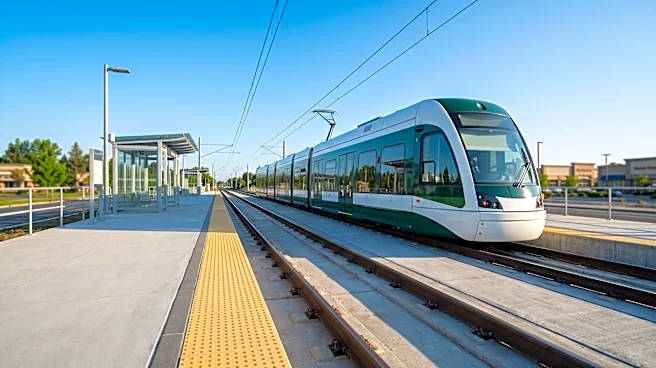
The Southwest light-rail line, also known as the Green Line Extension, is scheduled to open on June 12, 2027, according to an announcement by Met Council Chair Robin Hutcheson. This 14.5-mile line will connect Eden Prairie to downtown Minneapolis, passing
through five cities: Minneapolis, St. Louis Park, Hopkins, Minnetonka, and Eden Prairie. The project, which gained approval nearly 15 years ago and took almost seven years to build with approximately 5,700 workers, has faced significant delays and cost overruns. Originally slated for a 2018 opening with a budget of $1.25 billion, the project's cost has swelled to $2.86 billion, making it one of Minnesota's most expensive public works projects. The line will feature 16 stations, with an estimated 32-minute trip time from Southwest Station in Eden Prairie to Target Field in Minneapolis.
Why It's Important?
The opening of the Southwest light-rail line is a significant development for public transit and economic growth in the Minneapolis-St. Paul metropolitan area. It is projected to provide access to 81,000 jobs and offer efficient transportation to key regional destinations, potentially transforming the trajectory for thousands of Minnesota families by enhancing job accessibility and reducing reliance on private vehicles. The project has already spurred substantial economic development, with $9.9 billion in construction between 2019 and 2024, and another $4.8 billion planned. For cities like Hopkins, the line represents a chance to shift towards dense, walkable urban design, moving away from car-centric development. The Federal Transit Administration projects daily ridership to reach 29,000 on weekdays and 9.5 million annually by 2035, indicating a substantial impact on regional commuting patterns and urban planning.
What's Next?
With the opening date set for June 12, 2027, the project will enter its final stages of readiness, including testing of signal systems and running trains along the line. Metro Transit is also proposing revisions to several local bus routes in the western suburbs to facilitate connections with the new Green Line stations, with public feedback being accepted through October 4. These changes aim to create a more integrated and efficient public transportation network across the west metro. Officials are also emphasizing public safety as the project nears completion. The long-term impact will involve monitoring ridership numbers, assessing the economic development spurred by the line, and evaluating its success in reducing highway congestion and connecting communities.
Beyond the Headlines
The Southwest light-rail line's journey, marked by extensive delays and cost overruns, highlights the complex challenges inherent in large-scale infrastructure projects in the U.S. It underscores the tension between ambitious public works, community needs, and financial realities. The project's evolution, including the addition of a 500-foot secant wall and numerous change orders, reflects the unforeseen engineering and environmental hurdles that can arise. Beyond its immediate transportation benefits, the line represents a philosophical shift towards sustainable urban development and reduced car dependency, aiming to foster more walkable and connected communities. Its eventual success or shortcomings will likely inform future public transit initiatives and infrastructure planning across the nation.