
What's Happening?
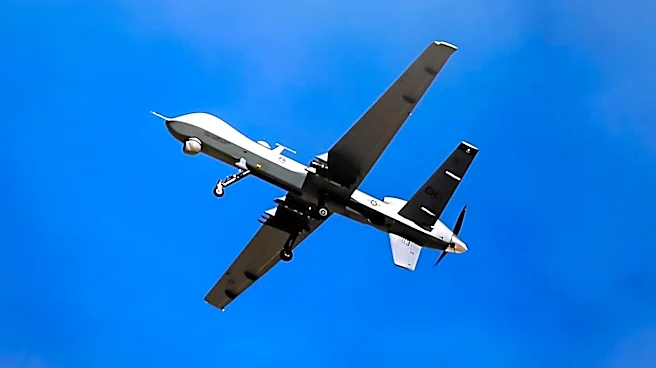
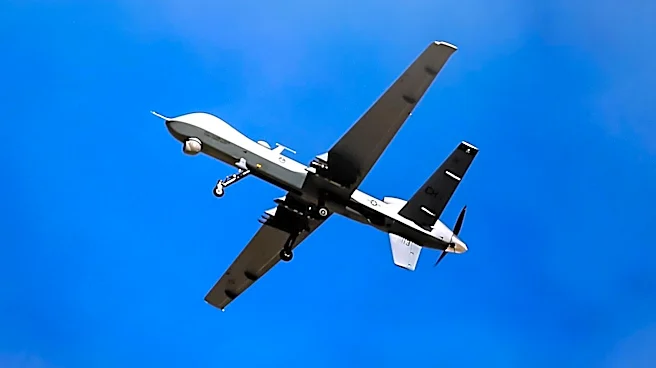
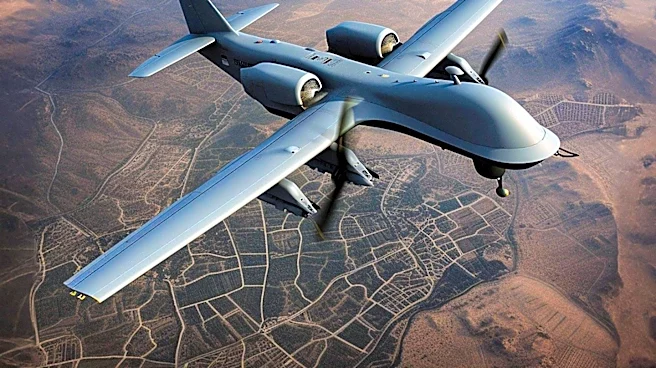
The U.S. Army is significantly investing in drone technologies to modernize its ability to conduct multidomain strike operations, particularly in maritime environments like the Pacific. Unmanned systems,
including reconnaissance drones, loitering platforms, and one-way attack systems, are increasingly complementing and, in some cases, replacing more expensive long-range missile systems. These drones provide persistent observation, enhance threat detection distances, and support joint efforts to achieve sea control through selective area denial. This strategic shift is part of the Army's new operational warfighting guidance, 'How the Army Fights,' which emphasizes integrating landpower into maritime campaigns. The goal is to enable naval freedom of action while denying adversary aggression, particularly against sophisticated anti-access and area-denial architectures in the Pacific.
Why It's Important?
This integration of drone technology is critical for the U.S. Army's role in the Pacific, where it faces adversaries with advanced integrated reconnaissance-strike networks. By deploying drones, the Army can extend its reach for threat detection and strike capabilities, creating cascading dilemmas for potential adversaries. This approach enhances the survivability of forces by reducing reliance on manned systems in high-risk areas and provides a cost-effective alternative to some traditional long-range missile systems. For U.S. national security, this means a more robust and adaptable defense posture in a strategically vital region, strengthening deterrence and improving the ability to respond to aggression. It also underscores a broader trend in military modernization, where unmanned systems are becoming central to joint force operations.
What's Next?
The Army's continued investment will likely focus on developing more advanced air, surface, and subsurface drone technologies, along with improved integration into existing command and control networks. Future efforts will aim to enhance the autonomy, endurance, and payload capabilities of these drones, allowing them to perform more complex missions. There will also be an emphasis on developing countermeasures against adversary drone swarms and electronic warfare. The Army will continue to refine its doctrine to effectively incorporate these unmanned systems into multidomain operations, ensuring seamless coordination with naval and air forces. This ongoing evolution will require continuous research and development, as well as robust training programs for personnel to operate and maintain these sophisticated systems.
Beyond the Headlines
The increasing reliance on drones in maritime warfare raises significant implications for the nature of future conflicts. The ability of drones to operate in contested environments with reduced risk to human life could alter the calculus of engagement, potentially leading to more frequent or prolonged conflicts. Ethical considerations surrounding autonomous weapons systems and their decision-making processes will become more pressing. Furthermore, the proliferation of drone technology could lower the barrier to entry for various actors in maritime disputes, complicating international law and norms of engagement. The development of advanced drone capabilities also highlights the importance of maintaining a technological edge and investing in cybersecurity to protect these systems from exploitation by adversaries.