



What's Happening?
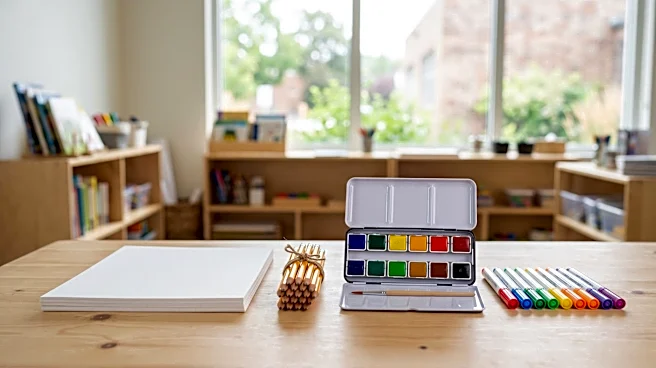
The Ashland Schools Foundation is developing a 'creative redistribution center' to repurpose donated materials into classroom supplies for the Ashland School District. This initiative aims to connect community donations of unused paper, pencils, art supplies,
and other materials with teachers who need them. Co-executive director Erica Thompson noted that approximately one-third of the foundation's grant requests are for classroom materials. The center will allow Ashland School District teachers to acquire supplies at no cost using a credit system. Additionally, the public will have the opportunity to purchase materials at discounted prices. The foundation regularly receives calls from community members offering various supplies, indicating a significant pool of available resources within the area. The project seeks to streamline the donation process and ensure that valuable materials are utilized effectively within the school district.
Why It's Important?
This initiative is important because it addresses a critical need for classroom materials while promoting sustainability and community engagement. By providing teachers with free access to supplies, the foundation can alleviate financial burdens on educators, allowing them to allocate more resources to other educational endeavors. The discounted sales to the public also offer an affordable option for families and individuals to acquire materials, fostering broader community benefit. Furthermore, the project champions environmental responsibility by giving leftover and unused items a 'second life,' reducing waste and promoting a circular economy within the community. This model could serve as a blueprint for other school districts facing similar challenges in resource allocation and waste management, demonstrating an innovative approach to supporting education through local collaboration.
What's Next?
The Ashland Schools Foundation plans to open the creative redistribution center near the end of the current school year. This timing is strategic, as it coincides with when teachers typically clean out their classrooms and often have leftover materials to donate. The foundation has not yet finalized a specific location for the storefront, but it will be situated off school grounds. The center will be operated by volunteers and part-time staff. Beyond its primary function of supplying classrooms, the facility is also envisioned to host art classes and workshops, further enriching educational opportunities for the community. The foundation anticipates that public sales of materials could eventually generate revenue, providing an additional funding stream to support its broader educational initiatives and potentially stock more supplies.
Beyond the Headlines
The establishment of the creative redistribution center highlights a growing trend towards localized, community-driven solutions for resource management and educational support. This model not only addresses immediate material needs but also cultivates a culture of sharing and resourcefulness within the Ashland community. It underscores the idea that valuable resources often exist within homes and can be effectively channeled to public institutions like schools, reducing reliance on new purchases and external funding. The initiative also subtly promotes a shift in consumer behavior, encouraging residents to consider donating unused items rather than discarding them. This approach could foster stronger ties between the school district and the community, demonstrating how collective action can lead to tangible benefits for local education and environmental sustainability.