




What's Happening?
National Grid, in collaboration with Climate-i, has initiated a trial in the UK to capture sulfur hexafluoride (SF6) gas leaking from high-voltage transmission equipment. The system involves a temporary covering connected to a gas collection mechanism,
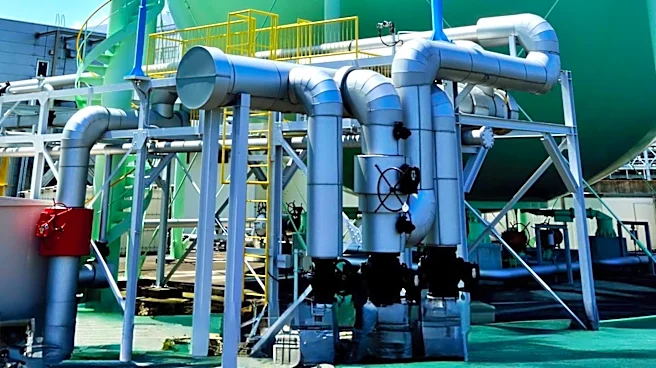
installed at a National Grid substation to address two specific leaks. A flexible adhesive rubber patch is used to cover each leak, directing the escaping SF6 gas to a capture rig. This rig measures the collected gas before transferring it to a storage tank, with Celtic Recycling responsible for its safe disposal. This technology is designed as a short- to medium-term solution for leaks that are difficult to access or require equipment shutdown for traditional repairs, and it can often be installed without interrupting operations.
Why It's Important?
This trial is a significant step in National Grid's commitment to reducing its operational SF6 emissions, with a target to halve them between 2018/19 and 2030/31. SF6 is a potent greenhouse gas, and its release into the atmosphere contributes significantly to climate change. The innovative capture system offers a flexible and potentially less disruptive method for managing leaks, especially in situations where equipment cannot be easily shut down. If successful, this technology could provide a valuable tool for utilities globally to mitigate SF6 emissions from their transmission assets, contributing to broader environmental protection efforts and regulatory compliance. The ability to monitor leak behavior remotely also enhances operational efficiency and environmental stewardship.
What's Next?
National Grid and Climate-i will continue to monitor and refine the SF6 capture system over the coming months, evaluating its performance under operational conditions. The trial's success will determine the broader deployment of this technology across National Grid's infrastructure and potentially other utility networks. The data collected on leak behavior and equipment performance will be crucial for further development and optimization. If proven effective, this solution could become a standard practice for managing SF6 leaks, complementing existing strategies such as leak repair, mitigation measures, and the adoption of SF6-free switchgear in new substations. The outcome of this trial could set a precedent for environmental best practices in the energy transmission sector.
Beyond the Headlines
The trial of this SF6 capture system highlights the ongoing challenges and innovative solutions emerging in the energy sector's efforts to reduce its environmental footprint. SF6, while an excellent electrical insulator, poses a significant environmental risk due to its high global warming potential. The development and deployment of technologies like Climate-i's capture system underscore the industry's move towards more proactive and sustainable operational practices. This initiative also reflects a broader shift towards integrating environmental considerations into core business operations, moving beyond mere compliance to active mitigation. The ethical implications of managing such potent greenhouse gases are paramount, driving utilities to invest in research and development for cleaner and safer energy transmission methods.