
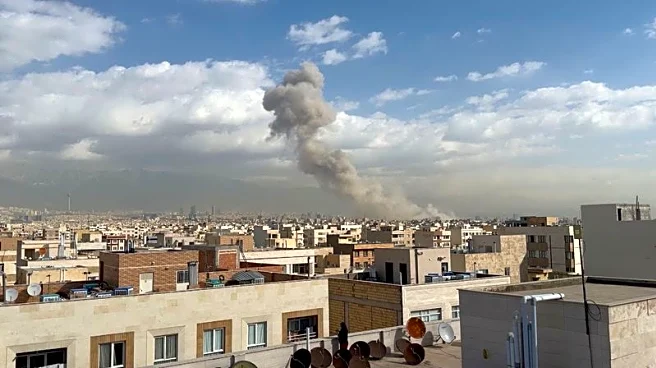


What's Happening?
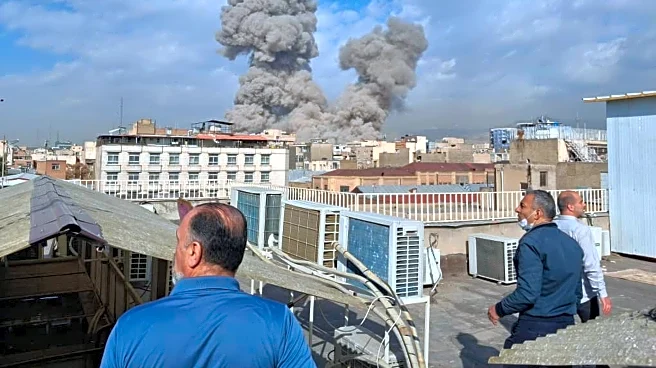
Iran has initiated retaliatory strikes across the Middle East in response to a joint U.S.-Israeli military operation that resulted in the death of Iranian Supreme Leader Ayatollah Ali Khamenei. This development marks a significant escalation in tensions
between Iran and the U.S.-Israel alliance. The military actions have intensified the conflict, with Iran targeting various strategic locations in the region. Retired U.S. Navy Vice Admiral Robert Murrett provided insights into the situation, highlighting the potential for further military engagements and the strategic implications of Iran's military capabilities.
Why It's Important?
The escalation of military actions between Iran and the U.S.-Israel alliance has significant implications for regional stability and international relations. The death of Ayatollah Ali Khamenei could lead to a power vacuum within Iran, potentially destabilizing the country's political landscape. The retaliatory strikes by Iran may provoke further military responses, increasing the risk of a broader conflict in the Middle East. This situation could impact global oil markets, given the region's critical role in energy production, and may lead to increased military spending and strategic realignments among global powers.
What's Next?
The international community is likely to closely monitor the situation, with potential diplomatic efforts to de-escalate tensions. The U.S. and Israel may consider additional military or strategic responses to Iran's actions. Regional powers and global stakeholders, including the United Nations, may call for negotiations to prevent further escalation. The situation could also influence domestic politics in the involved countries, as leaders navigate the complex geopolitical landscape and public opinion.