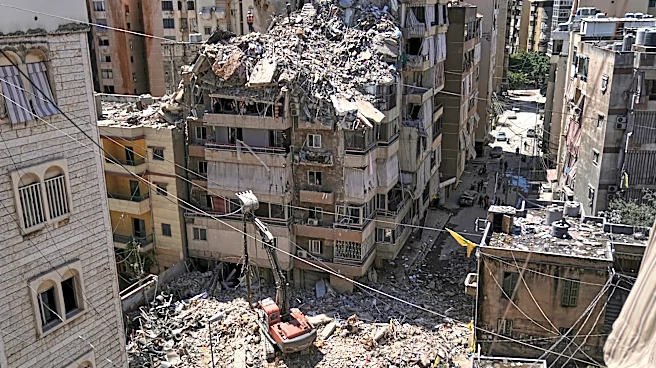







What's Happening?
The U.S. will facilitate peace talks between Israel and Lebanon on May 14-15, aiming to establish a comprehensive peace and security agreement. The discussions will address border delineation, humanitarian relief, and the restoration of Lebanese sovereignty.
A key focus is the disarmament of Hezbollah, which the U.S. views as essential for peace. Lebanese Prime Minister Nawaf Salam has committed to ensuring state control over weapons, emphasizing peace rather than normalization with Israel. U.S. Secretary of State Marco Rubio highlighted the importance of empowering the Lebanese government to counter Hezbollah's influence.
Why It's Important?
The resumption of Israel-Lebanon talks represents a significant diplomatic effort to resolve longstanding tensions in the region. The U.S. involvement underscores its strategic interest in Middle Eastern stability and its role as a mediator. Successful negotiations could lead to improved security and economic conditions in Lebanon, reducing Hezbollah's influence and fostering regional peace. However, the complexity of the issues, particularly Hezbollah's disarmament, poses significant challenges. The outcome of these talks could have broader implications for U.S. foreign policy and its relationships with Middle Eastern countries.
What's Next?
The success of the talks will depend on the willingness of both parties to compromise on key issues, such as border delineation and Hezbollah's disarmament. The U.S. may continue to play a central role in facilitating dialogue and providing support to the Lebanese government. The international community will be watching closely, as the outcome could influence regional dynamics and future peace efforts. Continued U.S. engagement and support will be crucial in ensuring the talks lead to a sustainable peace agreement.