






What's Happening?
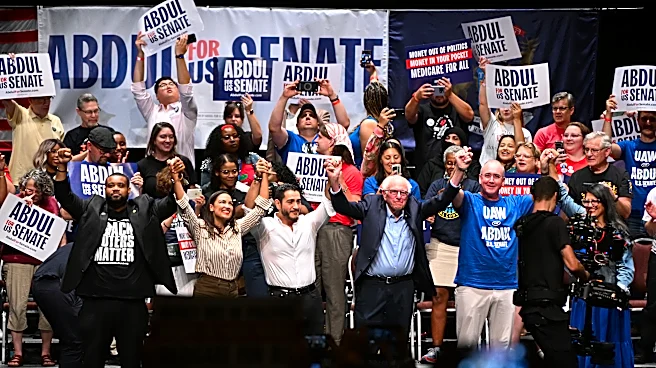
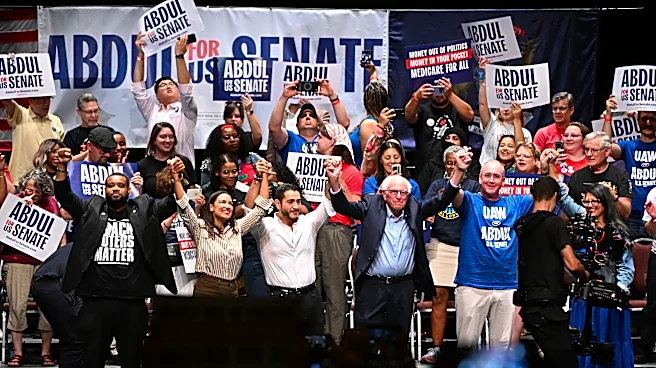
Democratic Representative Haley Stevens has positioned herself as the only non-millionaire candidate in the Michigan U.S. Senate race. This claim has been a focal point in her campaign against Democratic rival Abdul El-Sayed, who has delayed filing a personal
financial disclosure. Stevens has emphasized her practical approach to politics, contrasting it with El-Sayed's perceived celebrity status. Her campaign has been supported by significant spending from a super PAC, A Stronger Michigan, which has invested $13.5 million in her favor. The primary race is closely watched, with Stevens and El-Sayed representing different directions for the Democratic Party.
Why It's Important?
The financial status of candidates in political races can influence voter perception and campaign dynamics. Stevens' emphasis on her non-millionaire status aims to resonate with working-class voters and differentiate her from her opponents. The delay in El-Sayed's financial disclosure adds a layer of uncertainty and scrutiny to his campaign. The significant financial backing for Stevens highlights the role of dark money in political campaigns, raising questions about influence and transparency. This race could impact the Democratic Party's strategy and voter base in Michigan, a key battleground state.
What's Next?
El-Sayed is expected to file his financial disclosure by August 13, which could clarify his financial status and influence voter opinions. The outcome of the primary will determine the Democratic candidate facing Republican Mike Rogers in the general election. Both campaigns are likely to intensify their efforts to sway undecided voters, with potential implications for party unity and strategy. The role of super PACs and dark money in the race may continue to be a contentious issue, affecting public trust and campaign narratives.