



What's Happening?
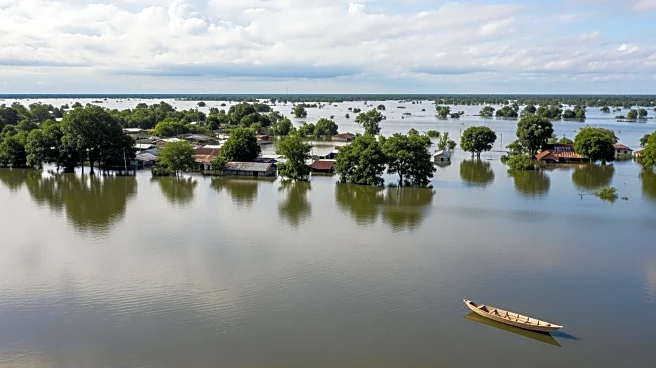
The United Nations has issued an urgent appeal for international support to assist Mozambique, where severe flooding has displaced nearly 400,000 people since October 1, 2025. According to the National Disasters Management Institute, the floods have resulted
in nearly 140 fatalities. The UN refugee agency, UNHCR, reports that approximately 100,000 people are currently residing in temporary shelters, such as schools and public buildings, which are severely overcrowded. These conditions pose significant risks, particularly for women and girls, who face increased threats of violence and exploitation. The UNHCR highlights the lack of privacy, lighting, and basic services in these shelters, which exacerbates the vulnerability of the displaced population.
Why It's Important?
The flooding crisis in Mozambique underscores the country's vulnerability to natural disasters and the urgent need for international aid. The UNHCR and the World Food Programme (WFP) have both emphasized the critical need for resources to provide life-saving assistance and protection services. The WFP has indicated that it requires $32 million for operations over the next three months to support over 450,000 people. The current funding shortfall, which is 40% less than the previous year, is severely limiting the ability to respond effectively. The situation highlights the broader challenges faced by humanitarian organizations in securing adequate funding to address escalating global crises.
What's Next?
With continued rainfall and high flood risks, further displacement in Mozambique is likely. The UNHCR is seeking $38.2 million in 2026 to scale up its response efforts. The WFP is employing various transportation methods, including amphibious vehicles and helicopters, to reach affected communities. The international community's response will be crucial in determining the extent of relief and recovery efforts. The ongoing crisis may prompt discussions on improving infrastructure and disaster preparedness in Mozambique to mitigate future impacts.