





What's Happening?
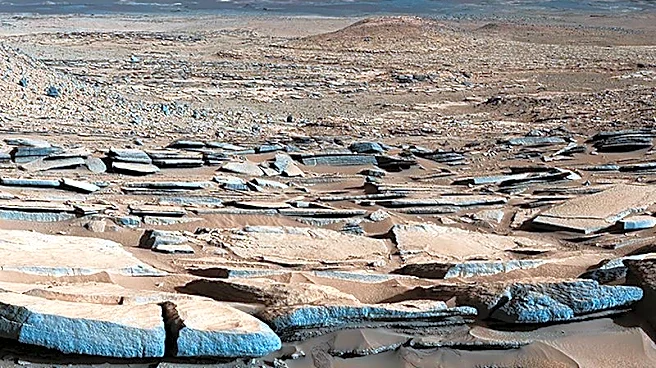
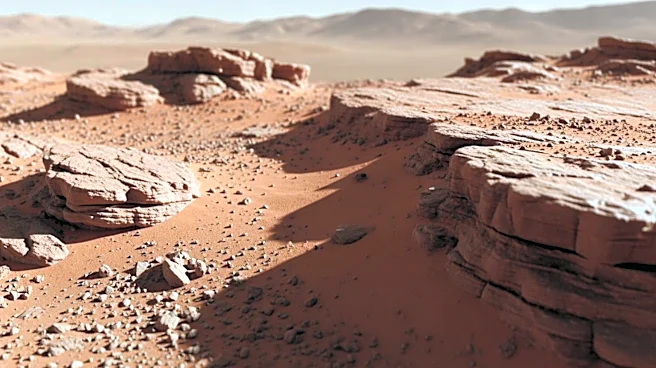
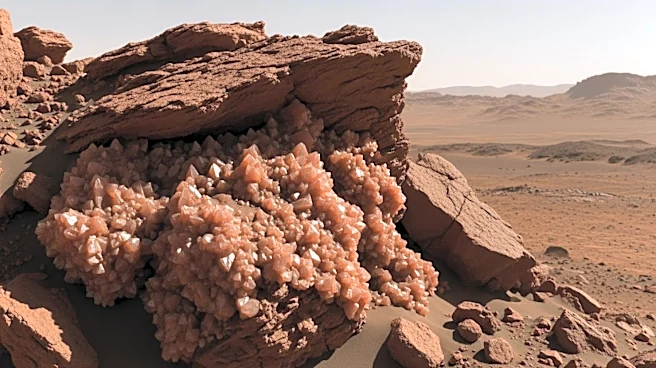
NASA's Perseverance rover has discovered unusually high levels of nickel in ancient rocks on Mars, specifically in the Neretva Vallis region. This finding suggests a rich chemical environment existed on Mars billions of years ago. The discovery was made
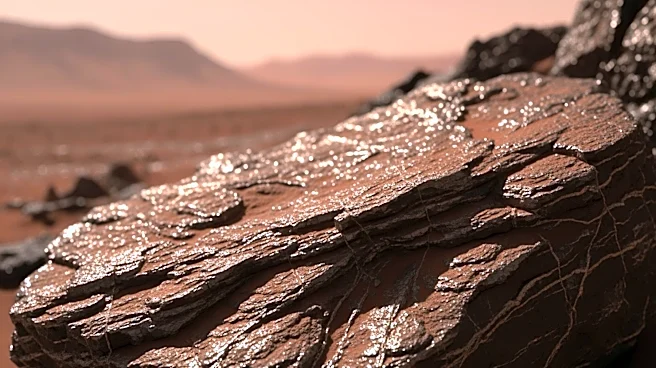
using a combination of laser tools, infrared sensors, and X-ray instruments, which revealed nickel concentrations in 32 out of 126 rocks analyzed, with levels reaching up to 1.1% by weight. These nickel-rich rocks resemble formations on Earth that are often linked to microbial activity, although this does not confirm the existence of life on Mars. The presence of nickel alongside iron sulfide minerals and sulfates like jarosite and akaganeite indicates a complex geological history. The source of the nickel remains uncertain, with possibilities including volcanic rock breakdown or meteorite deposits.
Why It's Important?
The discovery of high nickel levels in Martian rocks is significant as it provides new insights into the planet's geological and potentially biological history. On Earth, similar mineral formations are associated with microbial processes, suggesting that Mars may have had conditions conducive to life. This finding adds a crucial piece to the puzzle of Mars' past environment, which is essential for understanding the planet's habitability. The research could influence future Mars exploration missions and the search for signs of past life. Additionally, understanding Mars' chemical environment helps scientists draw parallels with early Earth, offering clues about the conditions that may have supported life on our planet.
What's Next?
Further research is needed to determine the exact source of the nickel in the Neretva Vallis region and to explore potential connections between the nickel and organic matter found in the area. Scientists will continue to analyze data from Perseverance and other Mars missions to build a more comprehensive picture of the planet's history. These efforts may include targeted drilling and sample collection for future return missions to Earth, where more detailed analyses can be conducted. The findings could also guide the selection of future landing sites for exploration missions aimed at uncovering evidence of past life on Mars.