






What's Happening?
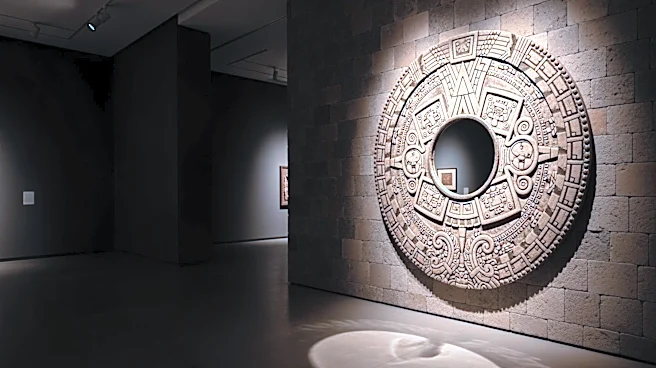
British artist Thomas Houseago has unveiled a new installation in London that prominently features a rare Aztec mirror. This sacred object, made from volcanic glass, was historically used as a conduit into the spiritual dimension. The installation is part
of a broader exhibition that explores the connection between art and the past, emphasizing the physicality of human existence. Houseago's work is displayed alongside other notable pieces, including a Cycladic marble idol and a wooden Egyptian mask, creating a dialogue between ancient and modern art forms. The exhibition is open to the public until September 19, offering visitors a chance to engage with these historical and spiritual themes.
Why It's Important?
The inclusion of the Aztec mirror in Houseago's installation highlights the ongoing interest in spiritual and historical themes within contemporary art. This exhibition not only connects viewers to ancient cultures but also prompts reflection on the role of art in bridging past and present. By showcasing such a rare and culturally significant object, the installation underscores the importance of preserving and understanding historical artifacts. This approach can influence how art institutions curate future exhibitions, potentially leading to a greater emphasis on cultural heritage and its relevance to modern audiences.
What's Next?
As the exhibition continues, it is likely to attract art enthusiasts and scholars interested in the intersection of ancient artifacts and contemporary art. The success of this installation could encourage other artists and galleries to explore similar themes, potentially leading to more exhibitions that focus on cultural and historical connections. Additionally, the public's response to the Aztec mirror and its spiritual significance may inspire further research and dialogue about the preservation and interpretation of such artifacts in the art world.
Beyond the Headlines
The use of the Aztec mirror in Houseago's installation raises questions about the ethical considerations of displaying sacred objects in art exhibitions. It prompts a discussion on the responsibilities of artists and curators in handling culturally significant items, especially those with spiritual connotations. This could lead to broader conversations about the role of museums and galleries in respecting and honoring the cultural heritage of indigenous peoples, potentially influencing future policies and practices in the art world.