


What's Happening?
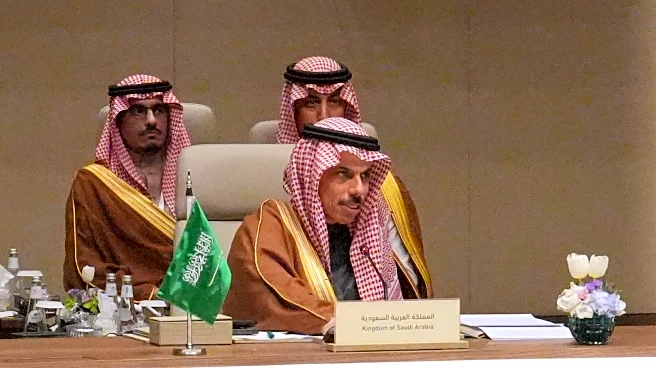
Jamie Dimon, CEO of JPMorgan, expressed optimism about the potential for long-term peace in the Middle East despite the ongoing conflict in Iran. Speaking at the Hill and Valley Forum in Washington, DC, Dimon highlighted that countries such as Saudi Arabia,
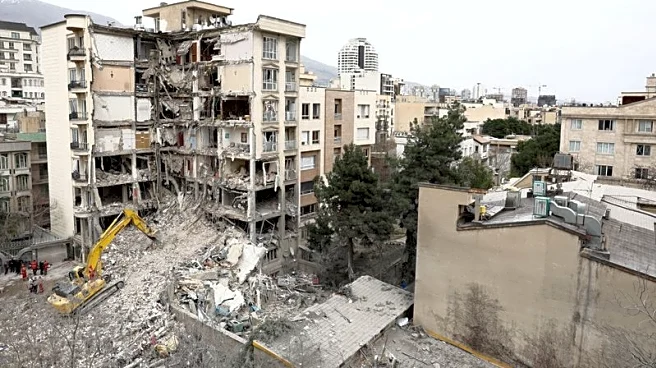
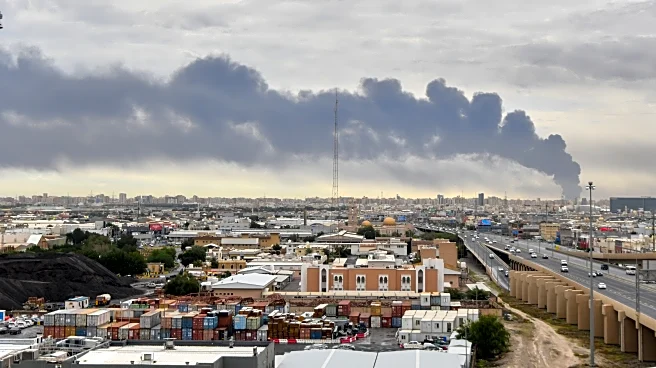
the UAE, Qatar, America, and Israel are aligned in their desire for permanent peace in the region. He emphasized the role of foreign direct investment as a crucial factor in achieving this peace, noting that major cities like Dubai and Abu Dhabi have become financial hubs attracting significant investment. However, the ongoing conflict poses risks, as evidenced by recent drone strikes damaging Amazon's data centers in the region. Dimon suggested that the realization of the need for peace is growing among these nations, driven by the economic implications of instability.
Why It's Important?
The potential for peace in the Middle East holds significant implications for global economic stability and investment. The region's transformation into a financial hub, particularly in cities like Dubai and Abu Dhabi, underscores the importance of a stable environment for attracting foreign direct investment. The ongoing conflict in Iran, however, threatens this stability, as seen with the attacks on data centers, which are critical infrastructure for modern economies. Dimon's comments highlight the interconnectedness of peace and economic growth, suggesting that achieving lasting peace could unlock further investment opportunities and economic development in the region. This situation also reflects broader geopolitical dynamics, where economic interests may drive diplomatic efforts toward conflict resolution.
What's Next?
The path to peace in the Middle East will likely involve continued diplomatic efforts and negotiations among the involved nations. President Trump's recent claim of productive conversations with Iran, although denied by Iranian state media, indicates ongoing diplomatic engagements. The focus on foreign direct investment as a peace driver suggests that economic incentives could play a pivotal role in shaping future diplomatic strategies. Stakeholders, including international investors and regional governments, will be closely monitoring developments, as the resolution of the conflict could significantly impact investment flows and economic growth in the region.
Beyond the Headlines
The emphasis on data centers as critical infrastructure highlights a shift in how economic power and security are perceived in the modern era. As data centers become targets in conflicts, their protection and resilience become paramount for maintaining economic stability. This development also raises questions about the security of global digital infrastructure and the need for international cooperation to safeguard these assets. The situation underscores the evolving nature of warfare and economic competition, where digital assets and infrastructure play increasingly central roles.