



What's Happening?
ICAN Australia has expressed significant safety concerns regarding the AUKUS-linked Henderson Defence Precinct and the effective basing of US submarines at Stirling Naval Base in Western Australia. The organization highlights that the infrastructure expansion
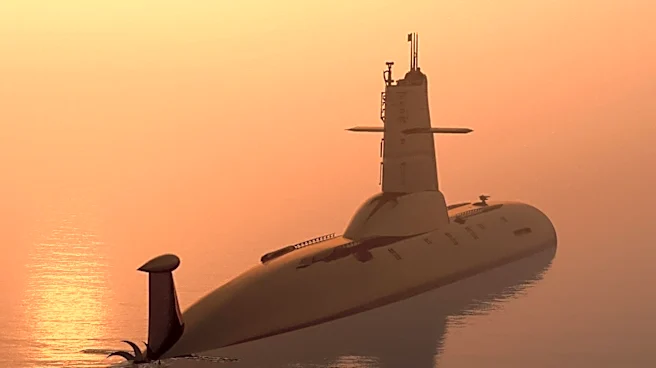
at Henderson and HMAS Stirling, combined with adjacent residential developments, effectively establishes a major US naval base. This development, according to ICAN Australia, significantly elevates Perth as a high-priority target in the event of conflict. A critical concern arises from 2030 onwards, when potentially nuclear-armed U.S. Virginia-class submarines are expected to operate in Australia, which ICAN Australia believes could breach commitments under the South Pacific Nuclear Free Zone (Rarotonga) Treaty. The group also points out that the Australian government currently does not inquire if US platforms carry nuclear weapons, relying instead on the Trump administration to respect treaty obligations.
Why It's Important?
ICAN Australia's concerns are significant due to the potential implications for regional security, environmental safety, and international treaty obligations. The establishment of a major US naval base in Western Australia, particularly with the presence of nuclear-powered and potentially nuclear-armed submarines, fundamentally alters the strategic landscape of the Indo-Pacific. This could increase geopolitical tensions and make Perth a primary target in any future conflict, directly impacting the safety and security of Australian citizens. Furthermore, the potential breach of the South Pacific Nuclear Free Zone Treaty could undermine Australia's long-standing commitment to nuclear non-proliferation and create diplomatic friction within the region. The lack of transparency regarding nuclear weapons on US vessels also raises questions about national sovereignty and the public's right to know about potential risks, emphasizing the need for robust community action plans and transparent waste management strategies.
What's Next?
ICAN Australia is advocating for greater transparency and accountability from federal and state leaders regarding the risks associated with hosting nuclear submarines. This will likely involve continued public campaigns, calls for parliamentary inquiries, and engagement with international bodies to ensure Australia upholds its nuclear-weapon-free commitments. The organization is pushing for the Australian government to sign the UN Treaty on the Prohibition of Nuclear Weapons, aligning with the Labor Party's stated commitment. Future developments will likely include ongoing debates about the storage and disposal of highly enriched uranium fuel and other radioactive waste generated by nuclear-powered submarines, which ICAN Australia stresses will require high-level military security for millennia. The community will also likely demand comprehensive action plans for nearby suburbs to manage potential reactor accidents, ensuring public safety and environmental protection.
Beyond the Headlines
The concerns raised by ICAN Australia extend beyond immediate safety and treaty compliance, touching upon deeper ethical and long-term environmental justice issues. The potential for nuclear waste disposal on First Nations lands, as highlighted by ICAN Ambassador Karina Lester, brings to the forefront historical injustices and the disproportionate impact of nuclear activities on Indigenous communities. This raises critical questions about environmental racism and the equitable distribution of risks associated with national defense projects. Ethically, the debate challenges Australia's moral standing as a proponent of nuclear disarmament while simultaneously hosting nuclear-powered and potentially nuclear-armed foreign vessels. The long-term management of radioactive waste, which remains hazardous for thousands of years, also presents an intergenerational ethical dilemma, burdening future generations with the consequences of today's defense decisions. This situation underscores the complex interplay between national security, environmental stewardship, and social justice.