



What's Happening?
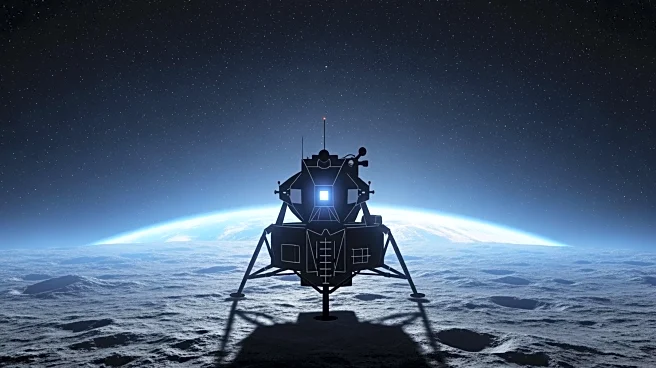
NASA has contracted Intuitive Machines, a Houston-based company, to deliver science and technology payloads to the lunar surface as part of the Artemis program. The $180.4 million contract is part of NASA's Commercial Lunar Payload Services (CLPS) initiative.
The mission aims to enhance understanding of the Moon's South Pole region by studying its chemical composition, regolith structure, and radiation environment. This initiative is crucial for establishing a sustainable human presence on the Moon. Intuitive Machines will deliver seven payloads, including five from NASA, to the lunar surface by 2030. These payloads will help test technologies and gather data to support future human missions to the Moon and Mars.
Why It's Important?
This contract represents a significant step in NASA's efforts to collaborate with commercial partners for lunar exploration. By leveraging private sector capabilities, NASA aims to accelerate the pace of lunar exploration and reduce costs. The data collected from these missions will be vital for planning long-term human activities on the Moon, such as building infrastructure and conducting scientific research. The success of this mission could also bolster the U.S. position in the global space race, particularly in light of China's growing lunar ambitions. The collaboration with Intuitive Machines highlights the increasing role of private companies in space exploration, potentially leading to more innovative and cost-effective solutions.
What's Next?
Intuitive Machines is expected to conduct regular CLPS deliveries, which will provide ongoing insights into the lunar environment. These missions will lay the groundwork for future human exploration, including potential missions to Mars. As NASA continues to work with commercial partners, more contracts and collaborations are likely to be announced, further expanding the scope of lunar exploration. The data and technologies developed through these missions will inform the design of future spacecraft and habitats, ensuring the safety and sustainability of human activities on the Moon.