








What's Happening?
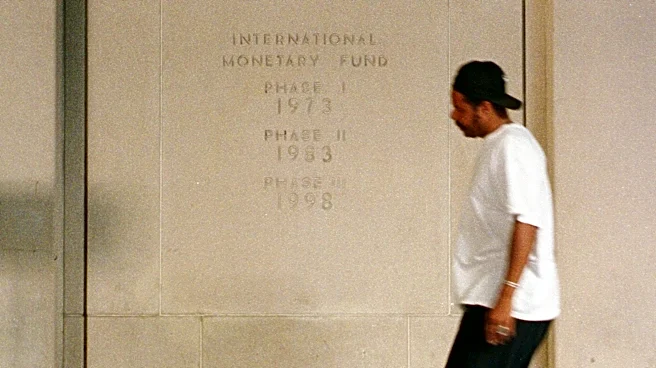
The International Monetary Fund (IMF) has revised its growth forecast for Israel, citing the prolonged impact of war on the country's economy. The IMF's annual review indicates that Israel's GDP is approximately 9% below the expected trajectory prior
to the conflict. The 2026 growth forecast has been adjusted to 3.5%, down from an earlier estimate of 4.8%, with a projected recovery to 4.4% in 2027. The IMF report highlights significant structural weaknesses in Israel's labor market, particularly low employment rates among Haredi men and Arab women, which have become macroeconomic risks. The report also suggests fiscal adjustments, including potential tax reforms, to address the widening government deficit and rising public debt.
Why It's Important?
The IMF's revised forecast underscores the economic challenges Israel faces due to ongoing conflict and labor market inefficiencies. The reduction in growth expectations could have significant implications for Israel's economic stability and its ability to attract foreign investment. The highlighted labor market issues, particularly the low employment rates among specific demographic groups, pose long-term risks to economic growth and social cohesion. The IMF's recommendations for fiscal adjustments, including tax reforms, aim to stabilize the economy but may face political and public resistance. The report also notes the potential impact of global AI market fluctuations on Israel's high-tech sector, a critical component of its economy.
What's Next?
The Israeli government may need to consider implementing the IMF's recommendations to address fiscal and labor market challenges. This could involve policy changes to increase labor force participation among underrepresented groups and adjustments to tax policies to boost revenue. The government will also need to monitor global economic trends, particularly in the AI sector, to mitigate potential risks to its high-tech industry. Stakeholders, including policymakers and business leaders, will likely engage in discussions to balance economic reforms with social and political considerations.
Beyond the Headlines
The IMF's report highlights deeper socio-economic issues within Israel, such as the integration of Haredi men and Arab women into the workforce. Addressing these challenges requires not only economic policies but also cultural and educational reforms to enhance skills and employment opportunities. The potential tax reforms suggested by the IMF could lead to debates about economic equity and the distribution of tax burdens. Additionally, the reliance on the high-tech sector for economic growth may necessitate strategic investments in education and infrastructure to maintain Israel's competitive edge in the global market.